The first cars: loco mobiles, ancestors of Tesla and a carriage with engine

AvtoAd
17/10/2023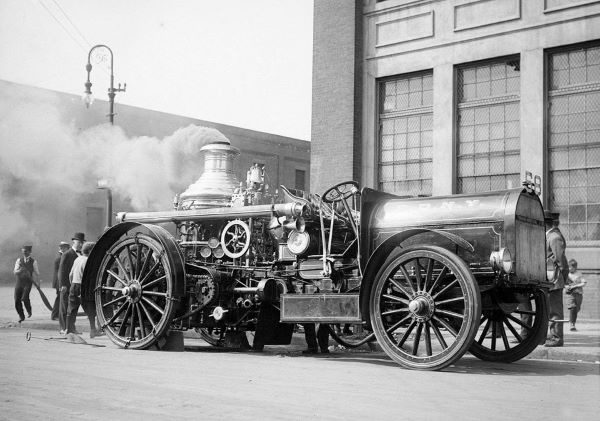
- Steam cars or a locomotive on wheels
- Electric cars or Teslas of the past
- Cars with internal combustion engines: gas and gasoline
- Retro car or bike with engine
One of the most important inventions in history that has significantly changed our lives, culture and environment is undoubtedly the automobile. After all, before its appearance, most people left their place of birth for no more than a few kilometers. And there was no question of travel. So who is this genius who made it possible for us to travel the world by creating the first car? And what were the cars of our predecessors and how did they change over the years?
Steam cars or a locomotive on wheels
Unfortunately, there is no unanimous answer to the question of who invented the car and when. After all, it was the painstaking work of many inventors that lasted more than one hundred years. Rumor has it that the author of the drawings of the first car was famous
inventor Leonardo da Vinci. However, all the sketches of the genius remained only on paper and were not translated into reality.
The creation of the first self-propelled car is attributed to the Frenchman Nicolas-Joseph Cugnot and it happened in 1769. This unit was more like a steam tricycle and served as a tractor for the French army. In 1801, in Great Britain, the inventor Richard Trevithick made a car carriage that moved with the help of a steam engine. It is considered to be the first tram locomotive intended for use on the road, rather than the railway.
Actually, all the first so-called cars were powered by steam and had many disadvantages. Steam vehicles took a very long time to launch, and their range was limited. Yes, they rattled and stank decently. That is why, to replace them, inventors around the world began to create buggies with an electric drive.
Electric cars or Teslas of the past
In the 1800s, inventors in England and France created vehicles that became the prototypes of modern electric cars. And in 1890, William Morrison built the first electric car in the USA. It could develop 22 kilometers per hour and accommodated 6 people. This invention caused considerable interest in America. Therefore, within a few years, a third of the vehicles in the US were electric. There were many of them among the taxis. And it is not surprising. After all, electric cars were not as difficult to start as steam cars and cars with gas engines. And the use itself did not involve complicated gear shifting. This ease of operation, quiet operation and lack of fumes of the electric car continues to attract people today. Only in the guise of Tesla or other modern electric cars.

Meanwhile, in 1898, Ferdinand Porsche did something revolutionary. He created the first hybrid car that ran on electricity and gas. It was he who became the prototype of modern hybrids.
Cars with internal combustion engines: gas and gasoline
The first car with an internal combustion engine was designed by the Swiss Francois Isaac de Rivaz in 1807. However, its design was not entirely successful. Many years after him, various inventors worked on the development of the internal combustion engine, which was supposed to put the car into action. And only in 1886, the German Carl Benz applied for a patent for his "vehicle powered by a gas engine." Patent number 37435 can be considered the birth certificate of a car.
The main features of Benz's invention were a compact high-speed single-cylinder four-stroke engine mounted horizontally at the rear, a tubular steel frame, a differential and three wheels with wire spokes. Engine power was 0.75 hp. (0.55 kW). Details included automatic intake flap, controlled exhaust valve, high-voltage electric vibrator ignition with spark plug and water/thermosyphon evaporative cooling. After Benz's wife and their two sons embarked on their first long-distance journey between cities in 1988, mass production of the car began. After all, with this 180-kilometer journey, they demonstrated the practicality and importance of the car to the whole world. This marked the beginning of the evolution of motor vehicles in the world. It can be said that Karl Benz's first gas car became the main catalyst in the production of modern cars, as many car manufacturers followed in his footsteps, trying to create their own version of the car.

In 1885, Gottlieb Daimler (along with his design partner Wilhelm Maybach) took the internal combustion engine a step further and patented what is widely recognized as the prototype of the modern gas engine. The Daimler-Maybach engine of 1885 was small, light, fast, used a fuel-injected carburettor and had a vertical cylinder. Its size, speed and efficiency revolutionized car design. On March 8, 1886, Daimler took a stagecoach and adapted it for his engine, thus creating the world's first four-wheeled automobile. Daimler is considered the first inventor to invent a practical internal combustion engine.
And although at that time electric cars were also popular and had a great chance of success, they were still replaced by cars with internal combustion engines due to greater affordability. As oil production reached industrial scale and gasoline became cheap, sales of gas-powered cars began to skyrocket. Today everything is the opposite. The high cost of fuel and problems with environmental pollution have helped bring electric cars back onto our roads.
Retro car or bike with engine
Let's talk about aesthetics. If we look at the evolution of car design separately, it can be seen that the first cars were similar to a horse-drawn carriage or a tricycle. The inventors did not have a single prototype, so they adapted the appearance of the car to the forms familiar to everyone. Thus, the first Benz car had only three wheels and resembled an elongated tricycle on which two people could sit. Later, four-wheeled cars with a gas engine appeared, which could accommodate a larger number of passengers.
In addition to the four wheels we are used to, the first cars also did not yet have a windshield, doors, turn signals or even a round steering wheel. All accessories for cars appeared gradually. Speedometers, seat belts, windshields, and rear-view mirrors were among the first. However, many years passed before the appearance of advanced security systems, hard drives, GPS and even air conditioning.
From the beginning of creation until today, the design of the car went through many stages. The appearance and principle of operation of this means of transportation was constantly modified and improved. Throughout the history of the automobile industry, which still continues to develop, countless examples have been designed and produced. As a driver and passenger, I would like one the most. Reduce or eliminate the number of road deaths and injuries. Perhaps one day there will be an inventor who will develop a "cure" for this "disease" as well.