Sensors on our cars, purpose and principle of operation

AvtoAd
26/03/2019
Briefly about some sensors used in the engine management system.
Phase sensor (camshaft position sensor)
Crankshaft position sensor (CPS)
Throttle position sensor (DPDZ)
Phase sensor (camshaft position sensor)

The information is used to organize fuel injection into a specific cylinder. Failure of the sensor switches the fuel supply to the pair-parallel mode, which leads to a sharp enrichment of the fuel mixture.
The phase sensor is installed on the engine in the upper part of the cylinder head behind the intake camshaft pulley. There is a disc with a slot on the intake camshaft pulley. The passage of the slot through the zone of the phase sensor corresponds to the opening of the intake valve of the first cylinder.
Idle speed regulator (ХХ)

It is a device that is necessary in the system to stabilize the idling speed of the engine. РХХ is a stepper electric motor with a spring-loaded conical needle. During the operation of the engine at idle speed, due to the change in the passage section of the additional air supply channel bypassing the closed throttle valve, the necessary for
its stable operation, the amount of air. This air is taken into account by the mass air flow sensor (MSF) and, according to its amount, the controller supplies fuel to the engine through fuel injectors. Using the crankshaft position sensor (CPS), the controller monitors the number of engine revolutions and
according to the operating mode of the engine, controls the RXX, thereby increasing or decreasing the supply of air bypassing the closed throttle valve.
When the engine is warmed up to operating temperature, the controller maintains idling speed. If the engine is not warmed up, the controller at the expense of RXX increases the revolutions and, thus, ensures engine warming up at high crankshaft revolutions. This mode of operation of the engine allows you to start the car immediately and without warming up the engine.
The idle speed regulator is installed on the throttle body and is attached to it mainly with two screws. РХХ is an executive device and its self-diagnosis in the system is not provided. Therefore, if the idle speed regulator malfunctions, the "CHECK ENGINE" lamp will not light up. Symptoms of RXX malfunctions are somewhat similar to DPDZ (throttle position sensor) malfunctions, but in the second case, the "CHECK ENGINE" lamp clearly indicates a DPDZ malfunction.
The following symptoms can be attributed to idling regulator malfunctions:
- unstable engine speed at idle,
- involuntary increase or decrease in engine speed,
- stopping the engine when the transmission is switched off,
- lack of increased revolutions when starting a cold engine,
- reduction of idling speed of the engine when the load is turned on (headlights, stove, etc.).
Oxygen sensor, lambda probe

The oxygen sensor (lambda probe) is installed on the intake pipe of the muffler. Serious, but very reliable electrochemical device. The task of the oxygen sensor is to determine the presence of oxygen residues in the exhaust gases. There is oxygen - a lean fuel mixture, no oxygen - rich. Oxygen sensor readings are used to adjust fuel delivery. The use of leaded gasoline is strictly prohibited. Failure of the oxygen sensor leads to an increase in fuel consumption and harmful emissions.
Crankshaft position sensor (CPS)
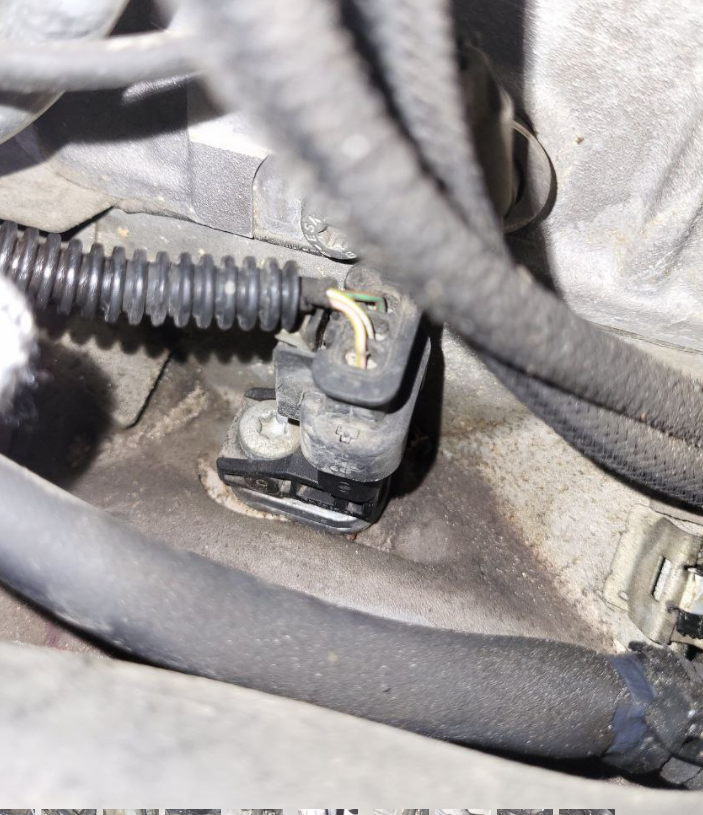
The crankshaft position sensor is designed to generate an electrical signal when the angular position of a special toothed disc installed on the engine crankshaft changes. The crankshaft position sensor is installed near the crankshaft pulley and reads signals on a special groove or magnetic strip. This is the main sensor, according to the readings of which the cylinder, fuel supply time and spark are determined. Structurally, the crankshaft position sensor is a piece of magnet with a coil of thin wire. Very hardy. The crankshaft position sensor works in tandem with the crankshaft toothed pulley. Sensor failure - engine stop. In the best case, limiting the engine speed in the region of 1500 - 3000 rpm.
Oil pressure sensor
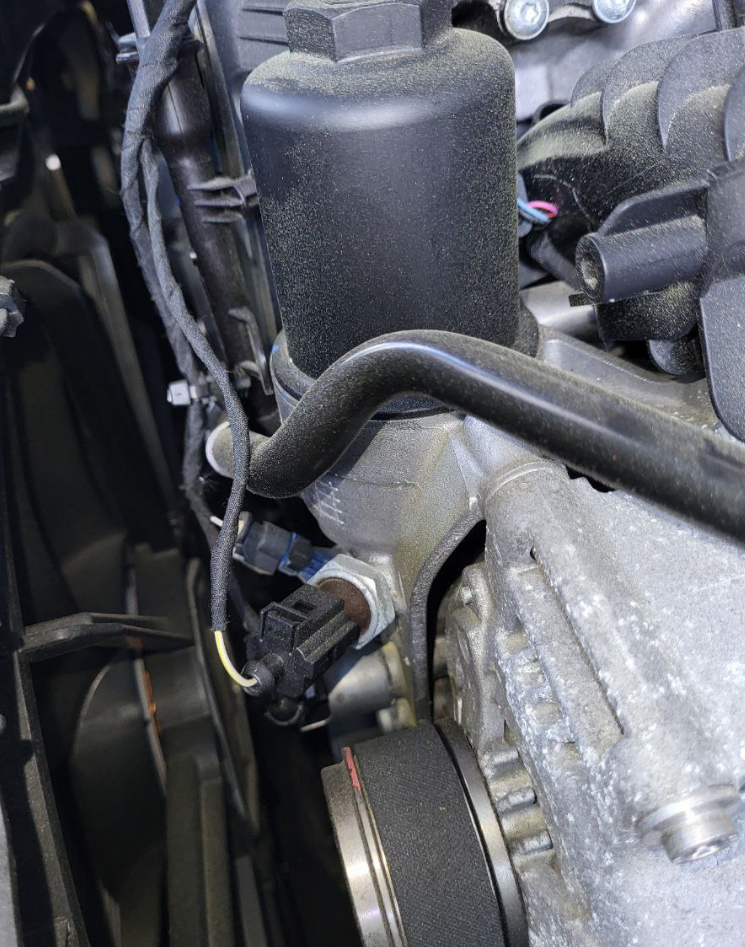
Oil pressure in the system is controlled by a special sensor installed in the oil line. The electrical signal from the sensor is sent to the control lamp on the instrument panel. Cars can also be fitted with an oil pressure gauge.
An oil pressure sensor can be included in the engine management system, which shuts down the engine when the oil pressure drops dangerously.
On modern engines, an oil level control sensor and a corresponding signal lamp are installed on the instrument panel. Along with this, an oil temperature sensor can be installed.
Coolant temperature sensor
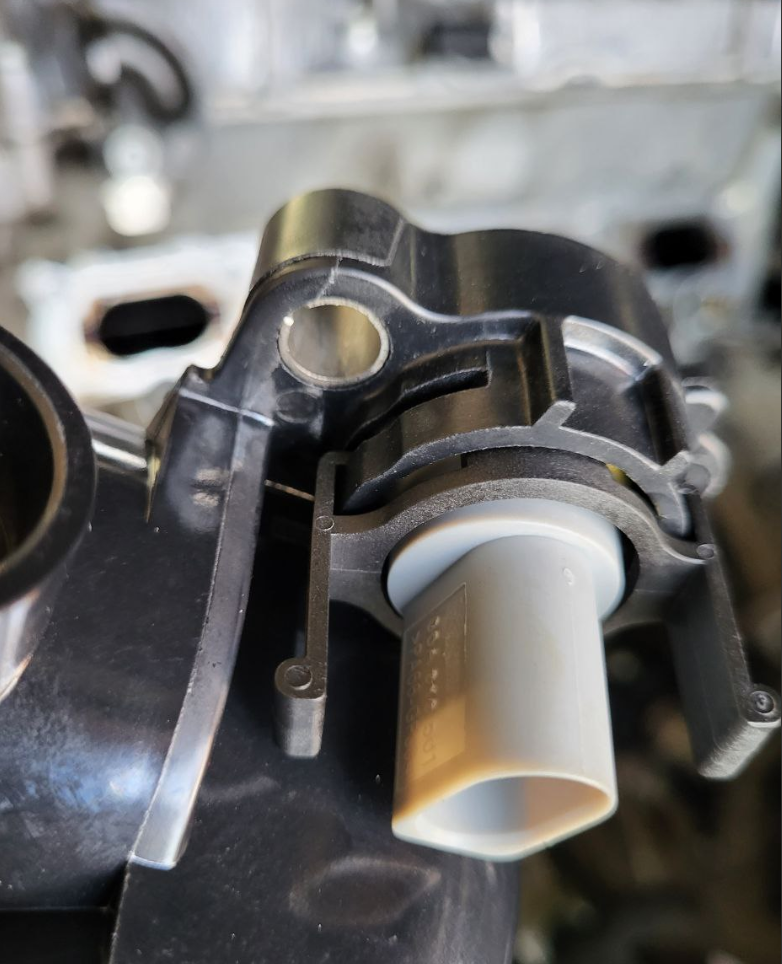
The coolant temperature sensor is installed between the block head and the thermostat. The coolant temperature sensor has two contacts. The main functional purpose of the coolant temperature sensor is that the colder the engine, the richer the fuel mixture. Structurally, the coolant temperature sensor is a thermistor (resistor), the resistance of which changes depending on the temperature. Typical values are 100 gr. – 177 ohms, 25 gr. – 2796 Ohm, 0 gr. – 9420 Ohms, – 20 gr. – 28680 ohms. Coolant temperature affects almost all engine management characteristics. The coolant temperature sensor is very reliable. The main malfunctions are a violation of the electrical contact inside the sensor, a violation of the insulation or a break in the wires. Failure of the coolant temperature sensor - turning on the fan on a cold engine, difficulty starting a hot engine, increased fuel consumption.
Read more in this article .
Throttle position sensor (DPDZ)

The throttle position sensor is mounted on the side of the throttle block on the same axle as the throttle actuator. The throttle position sensor reads readings from the gas pedal position. The main enemy of the throttle position sensor is engine washers. Term of service
throttle position sensor is completely unpredictable. Disturbances in the operation of the throttle position sensor are manifested in high idle speeds, jerks and dips at low loads.
Detonation sensor
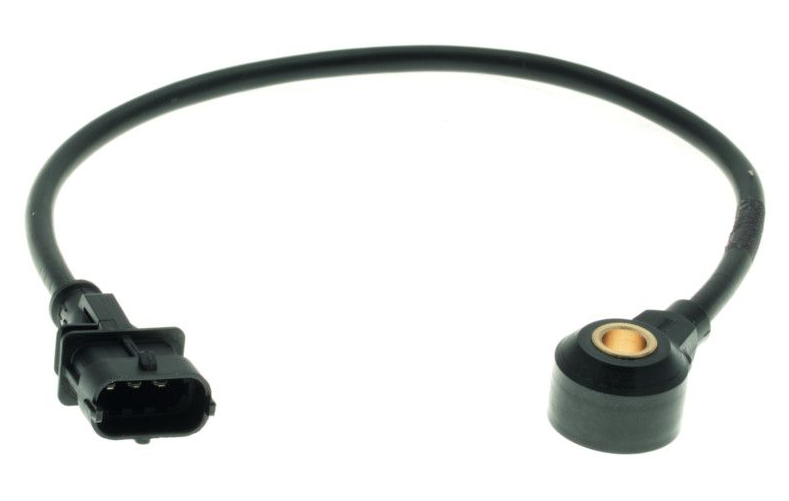
The detonation sensor is installed on the engine block between the 2nd and 3rd cylinders. There are two types of detonation sensor - resonant (barrel) and broadband (pill). Detonation sensors of different types are not interchangeable. The detonation sensor is a reliable element, but requires regular cleaning of the connector. The principle of operation of the detonation sensor is the same as that of a piezo lighter. The stronger the impact, the greater the tension. Monitors detonation knocks of the engine. According to the detonation sensor signal, the controller sets the ignition advance angle. There is detonation - later ignition. Failure or breakage of the detonation sensor is manifested in the "dullness" of the motor and increased fuel consumption.
It is a hollow hexagonal body with a threaded protrusion for screwing into the internal combustion engine. Inside the case, a two-layer piezo element is screwed with an ordinary screw, which produces EMF when it is affected by sound frequency fluctuations through the sensor case. These oscillations are converted into an audio signal with the help of a piezo element. Thus, with the help of DD, the EBK unit "hears" what is happening in the engine during its operation. That is, it is a kind of microphone, or rather, a piezo-ceramic pickup (like on vinyl record players).
The case is filled to the brim with a special compound that feels like fragile artificial rubber. This compound (on the forum it is called "resin") not only protects the piezo element from the influence of the environment, but also creates a specific frequency response (amplitude-frequency characteristic) of the signal, since the DD spectrum should lie in the region of 1400-6000Hz with a central frequency in around 2700Hz (approximate detonation frequency).
If detonation processes appear, the EBK unit automatically changes the ignition advance angle until detonation processes are reduced to a minimum or eliminated altogether. Thus, DD is an integral part of the chains of correction of the formation and the most efficient combustion of the fuel mixture. Failure of the DD is accompanied by the appearance of a self-diagnosis error, detonation processes in the internal combustion engine (at the same time, the characteristic so-called "ringing of the fingers"), worse traction, increased fuel consumption.