Faulty coolant temperature sensor (ECT): signs, causes and how to fix them

AvtoAd
08/04/2023
Coolant temperature sensor
FAQ or a few questions and simple answers):
What is a coolant temperature sensor?
Answer: It is a device that measures the temperature of the coolant in the car engine and transmits this information to the engine management system.
What is the principle of operation of the coolant temperature sensor?
Answer: The sensor responds to a change in fluid temperature by changing its electrical resistance, which the engine management system interprets as a specific temperature value.
What is the construction of a classic temperature sensor?
Answer: A classic sensor consists of a thermistor, which changes its resistance depending on the temperature, and a housing that provides contact with the cooling liquid.
What is the role of the coolant temperature sensor in the formation of the fuel mixture?
Answer: Based on data from the sensor, the engine control system regulates the ratio of fuel and air, which ensures optimal combustion of the prepared mixture.
What is the role of the coolant temperature sensor in starting the engine?
Answer: The sensor helps the engine management system determine if more fuel is needed during a cold engine start.
What are other important functions that depend on the readings of the coolant temperature sensor?
Answer: The sensor also affects the operation of the radiator fan, the mode of operation of the air conditioner and other systems of the car.
How to check the temperature sensor?
Answer: There are several methods for checking the sensor, including checking for errors in the engine management system, checking for temperature compliance, checking the connector, wiring, electrical resistance, and other methods.
What can be the consequences of a malfunction of the coolant temperature sensor?
Answer: A faulty sensor can cause the engine to misfire, increase fuel consumption, overheat the engine and other problems.
How to replace the coolant temperature sensor?
Answer: When replacing the sensor, it is important to ensure that the vehicle's engine is cold, as the high temperature of the coolant can cause burns. In addition, when the engine is hot, there may be increased pressure in the system, which is dangerous. After that, disconnect the sensor from the electrical connector, unscrew the old sensor, install a new one and connect it to the system (insert the plug). If you are not confident in your skills or do not have the necessary equipment, we recommend that you contact specialized service stations.
Warning: Do not do this yourself without proper knowledge and skills, as it can be dangerous!
What are the main manufacturers of coolant temperature sensors?
Answer: Some of the major manufacturers are Bosch, Denso, Delphi, NGK and others. There are many substitutes and fakes, so you should be careful when choosing and buying.
Abbreviations used in the article:
NTC Thermistor, thermistor is a semiconductor resistor whose active electrical resistance depends on temperature.
ECM (eng. engine control module, ECM) is a type of electronic unit (eng. electronic control unit, ECU), which controls a series of executive devices (actuators) on the internal combustion engine.
ECT — coolant temperature sensor.
1. What is a coolant temperature sensor?
2. The principle of operation of the coolant temperature sensor
3. Construction of a classic temperature sensor
4. The role of the coolant temperature sensor in the formation of the fuel mixture
5. The role of the coolant temperature sensor in starting the engine
6. Other important functions that depend on the readings of the coolant temperature sensor
7. How to check the temperature sensor?
7.1 Checking for errors in the engine control system (ECU)
7. 2 Checking temperature compliance
7.3 Determine the location of the sensor
7.6 Check electrical resistance
7.7 Other verification methods
1. What is a coolant temperature sensor?
The coolant temperature sensor (CTL) is an electronic device that is responsible for measuring the temperature of the coolant (antifreeze) in the vehicle's engine cooling system. But if we take into account all the processes that are affected by the indicators from this sensor, it is worth noting that it plays an important role in the operation of the engine, controlling such processes as the creation of a fuel mixture, ensuring the optimal temperature of the engine, starting the engine, fuel consumption and power of the unit. In this article, we will try to figure it out.
2. The principle of operation of the coolant temperature sensor
The principle of operation of a conventional coolant temperature sensor is based on the change of the thermistor resistance depending on the temperature.
A thermistor is a special element whose resistance changes according to temperature.
Typically, NTC thermistors (Negative Temperature Coefficient) are used, which reduce resistance when the temperature rises.
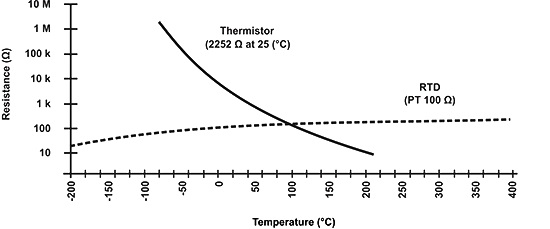
We see that the higher the temperature, the lower the resistance of the thermistor. At a temperature of 25 degrees, the resistance of the sensor is 2252 Ohms, and at a temperature of 100 degrees, the resistance has decreased to 100 Ohms.
In more complex construction schemes, microcontrollers are used, then the sensor measures the resistance of the thermistor and converts it into a signal that is transmitted to the engine control unit. But such sensors are rarely used to measure engine temperature, at least today.
Although there are other types of temperature sensors such as RTDs, NTC thermistors are the most common in automobiles due to their high sensitivity and ability to operate over a wide temperature range.
3. Construction of a classic temperature sensor:
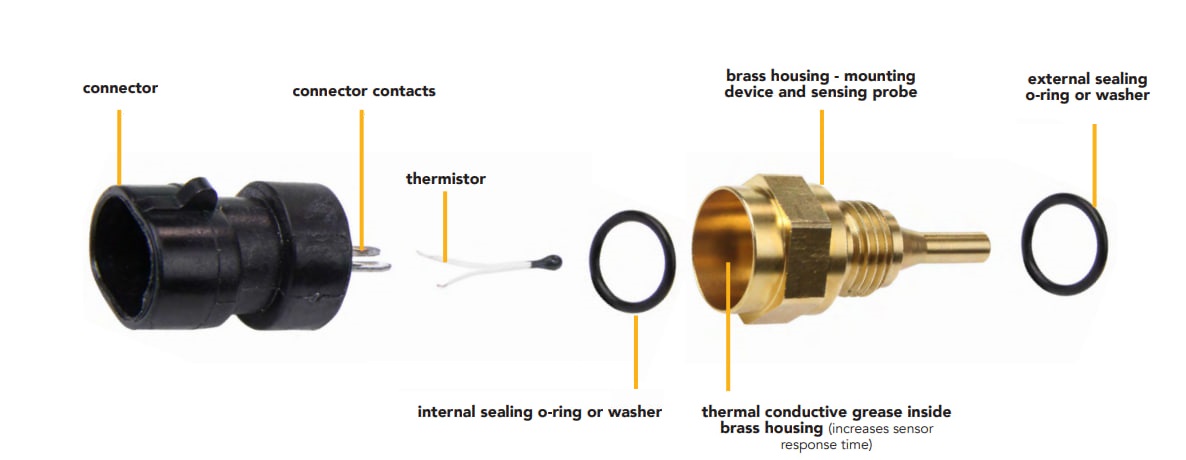
A classic coolant temperature sensor (an NTC thermistor is often used) consists of several main components.
Thermistor : This is the sensor core that changes its electrical resistance depending on the temperature. NTC thermistors reduce their resistance as the temperature increases.
Metal housing of the sensor : The thermistor is usually mounted inside a metal housing that has good thermal contact with the coolant. The case protects the thermistor from mechanical damage and ensures its thermal contact with the liquid.
Electrical contacts : The contacts (usually in the form of two leads) connect the sensor to the car's electrical system. They transmit the signal from the thermistor to the engine control system (ECU).
Hermetic Seal : This seal prevents coolant and moisture from entering the sensor's internal components.

In the disassembled state, the sensor looks like this:
4. The role of the coolant temperature sensor in the formation of the fuel mixture
The coolant temperature sensor plays an important role in the formation of the optimal fuel mixture. The engine control module (ECM) uses coolant temperature data to adjust the amount of fuel delivered to the engine's cylinders.
When the engine is cold, the fuel mixture must be richer to ensure effective ignition and speed up the engine's warm-up process. In this case, the ECM increases the amount of fuel supplied to the cylinders. As the temperature of the coolant increases, the ECM reduces the amount of fuel, providing a more economical and environmentally friendly engine operation mode.
5. The role of the coolant temperature sensor in starting the engine
The coolant temperature sensor is important for starting the engine, especially in cold weather. Taking into account the temperature of the coolant, the ECM adjusts the parameters of the engine, such as the duration of fuel injection and the ignition advance angle. This allows for reliable engine start-up in various operating conditions.
6. Other important functions that depend on the readings of the coolant temperature sensor
- Idle speed adjustment: ECM adjusts the engine idle speed based on the coolant temperature, which allows for stable engine operation during heating and in different weather conditions.
- Cooling system fan control: The coolant temperature sensor sends a signal to the ECM that controls the cooling system fan on and off. This allows you to effectively control the engine temperature, avoid overheating and ensure optimal operating conditions.
- Exhaust gas recirculation (EGR) control: The coolant temperature sensor helps the ECM regulate the operation of the exhaust gas recirculation system, reducing emissions of harmful substances and ensuring the car's environmental friendliness.
- Transmission control: In some vehicles with an automatic transmission, the coolant temperature sensor is used to correct the operation of the transmission. Taking into account the engine temperature, the ECM can change the moment of gear shifting, which contributes to fuel economy and provides a comfortable ride.
- Adaptation of the interior heating system: The coolant temperature sensor can also be used to adapt the operation of the interior heating system, providing passengers with comfortable conditions in different weather conditions.
7. How to check the temperature sensor?
Checking for problems in the operation of the cooling system and the coolant temperature sensor is a separate topic for discussion. It can be done in a number of ways, but here are the basic steps to accomplish this task:
7.1 Checking for errors in the engine control system (ECU)
Connect a vehicle diagnostic scanner to your vehicle's OBD-II port (usually located under the steering wheel) and check for error codes related to the coolant temperature sensor.
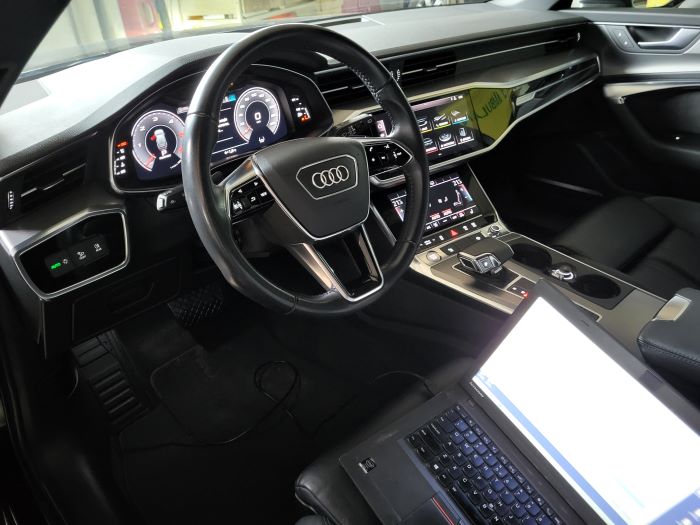
Coolant temperature sensors are monitored by the engine management system, and if they are not functioning properly, the vehicle's OBD-II system can cause various error codes. Here are some of them:
- P0115 : Error in the coolant temperature sensor system.
- P0116 : Coolant temperature sensor system malfunction.
- P0117 : Low input signal in the coolant temperature sensor system.
- P0118 : High input signal in the coolant temperature sensor system. This error is most common with a faulty sensor or poor contact on the connector.
And these codes can indicate problems not only with the sensor itself, but also with other elements of the engine cooling system, such as the thermostat or the coolant pump. If you receive one of these codes, you should contact a professional for further diagnosis and repair:
- P0119 : Coolant temperature sensor system period/frequency error.
- P0125 : Insufficient time to close the coolant temperature loop.
- P0126 : Insufficient coolant temperature for stable operation.
- P0128 : Insufficient coolant temperature.
This list of error codes is not complete and there may be other codes that indicate problems with the temperature sensor. Therefore, it is important to consider the specific wording of the code explanation on your scanner. Errors describing problems with the electrical circuit of the temperature sensor most often indicate a malfunction of the sensor itself, problems with contact in the connector, or damage to the wiring leading to the engine control unit. Rarely, but it happens that the control unit is faulty.
7.2 Checking temperature compliance
The main task is to understand whether the engine temperature in the sensor area corresponds to the temperature displayed on the instrument panel or according to the indicators from the ECM control unit.
Start the car engine and let it warm up. Use an infrared thermometer to measure the temperature near the coolant temperature sensor. Compare this value with the temperature displayed on the dashboard. But it is better to monitor the temperature through diagnostic equipment. If the engine is cold, for example 14 degrees, then the engine block readings that we look at through the diagnostic equipment should also be 14 degrees. We start the engine and gradually observe the increase in temperature using a pyrometer (infrared thermometer) in the area of the temperature sensor and compare it with the computer readings. The values should approximately match up to the values at which the cooling fan of the main engine cooling radiator turns on. If the values differ, this may indicate a malfunction of the sensor.
But if you see values that do not correspond to reality, or the temperature is unchanged, for example, 40 degrees. The engineers laid down an emergency work map for a faulty sensor and it hangs on one or more values.
Example:
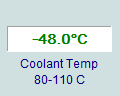
You can safely proceed to the next check point.
7.3 Determine the location of the sensor
The coolant temperature sensor is usually located on the engine where it can come into contact with the coolant. It is often located near the thermostat. Check your vehicle's repair manual for its exact location.
You can use Autodata, Alldata and other programs to find the location of the sensor we need. There are options when there are several sensors and then the check becomes difficult. But searches and checks must be started one way or another.

For example, in the 2018 Audi 2.0 TFSI, the temperature sensor is located on the cylinder head, behind, near the 4th cylinder:

And already on the V8 from GMC Yukon, also 2017, it is located in front of the engine near the throttle:
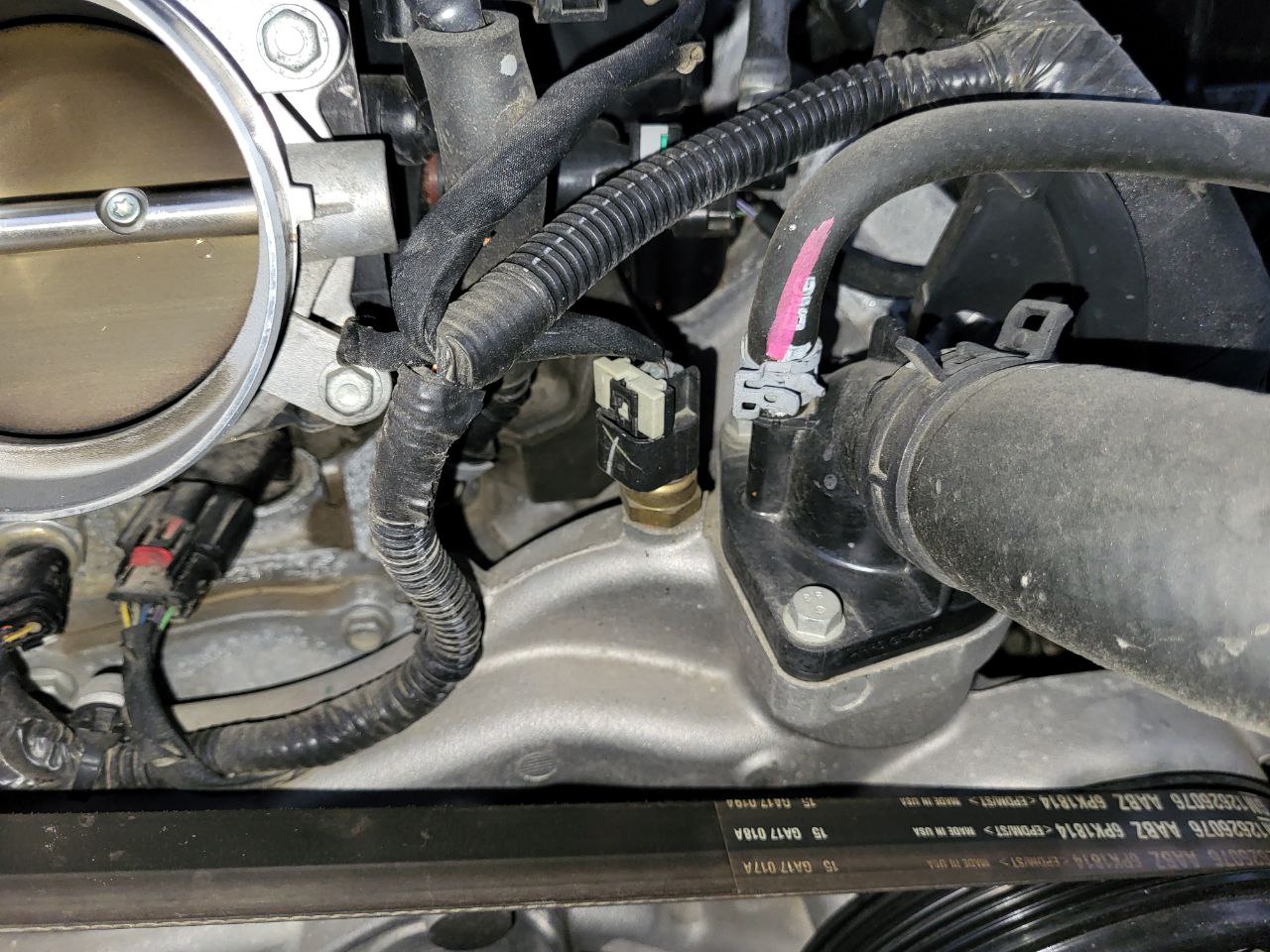
Physical condition check. Make a visual inspection and make sure that the sensor, connector and wiring to the sensor itself and to the ECT (Coolant Temperature Sensor) are intact. Inspect the sensor and its wiring for visible damage such as corrosion, cracks, or breaks. Make sure the sensor is properly connected to the vehicle's electrical system. If visually everything is fine, you need to check the wiring or the sensor itself. The choice of this sequence depends on the knowledge of the so-called "sick" places of a certain make and model of cars.
7.4 Checking the connector
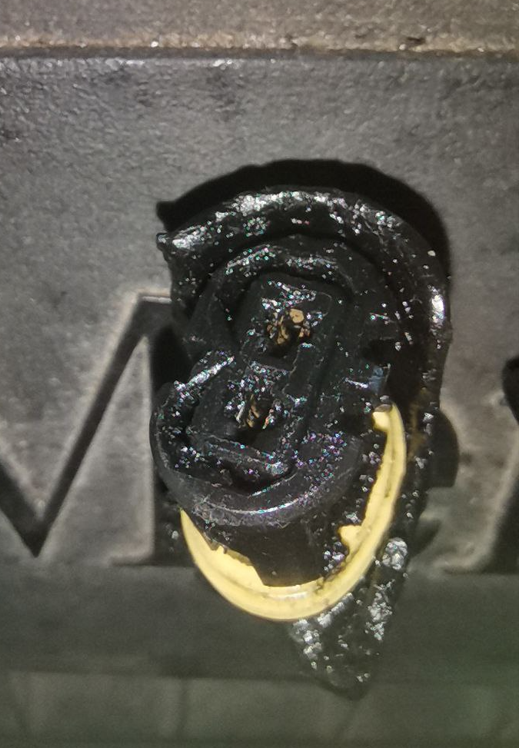
Check for corrosion or damage: Inspect the connector and wires for corrosion, breaks, or other visible damage. Corrosion can occur as a result of ingress of moisture and can prevent proper connection between the sensor and the connector. Oxidation is mostly green.
Check the contacts: Check the contacts in the connector, they should be clean and free of oxidation.
Check the fasteners: Make sure the sensor connector is securely attached and has no signs of wear that could cause a loose connection.
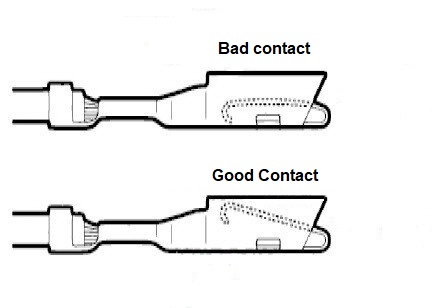
This is what Jackpot looks like)) Damaged case, dirty contacts, such a chip must be replaced:
7.5 Checking the wiring
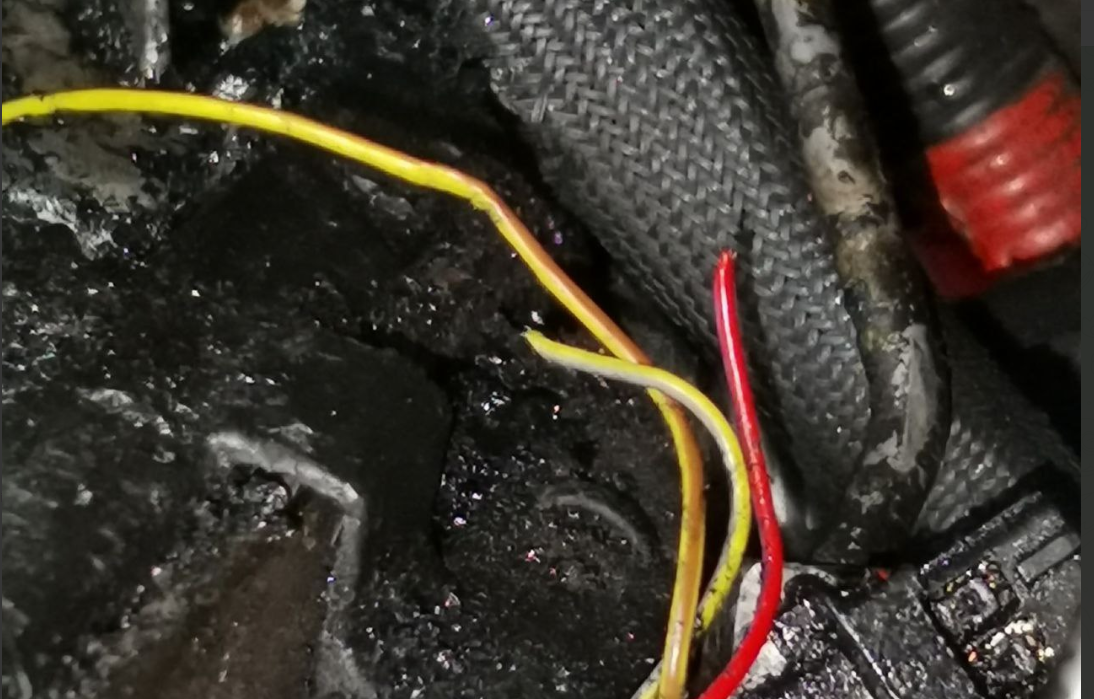
It is not uncommon for the wiring that connects the temperature sensor to the engine control unit to be damaged. This often happens with cars produced by the VAG concern, where a corrugation is used to protect the wiring. Over time, the wiring can rub against this corrugation, and if there is moisture under the hood at this time, the wires can become victims of oxidation, rot, or even break.
Wiring damage can be caused by various factors. Often this happens as a result of accidents, interventions in electricity to install additional equipment or anti-theft systems, as well as due to design errors.
Sometimes, when the wiring is worn, the wires can make contact with each other, and not only directly, but also through moisture. This is especially common in the winter when road salt is used on the wiring. In such cases, additional errors related to temperature sensor problems may appear.
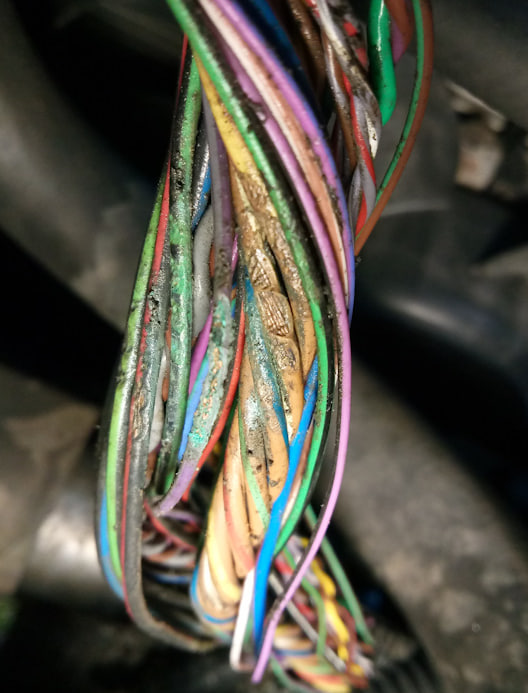
Physical damage to wiring due to external interference:
7.6 Check the electrical resistance:
Disconnect the sensor from the vehicle's electrical system. Using an ohmmeter, check the resistance between the sensor contacts. Compare this value with the recommended values in the repair manual. Note that resistance changes with temperature, so you may need to do this at different temperatures.
The figure shows how to check the sensor.

Each sensor has its own graph of the ratio of resistance to temperature. To make sure that these values are correct, you need to find technical literature, take a thermometer, be patient and check all this. But this is necessary for finalizing custom projects and complex malfunctions, or selecting a sensor when it is impossible to buy an original one. We will consider a simple method of checking the functionality of the sensor.
Let's take the temperature sensor from the BMW M57 engine:

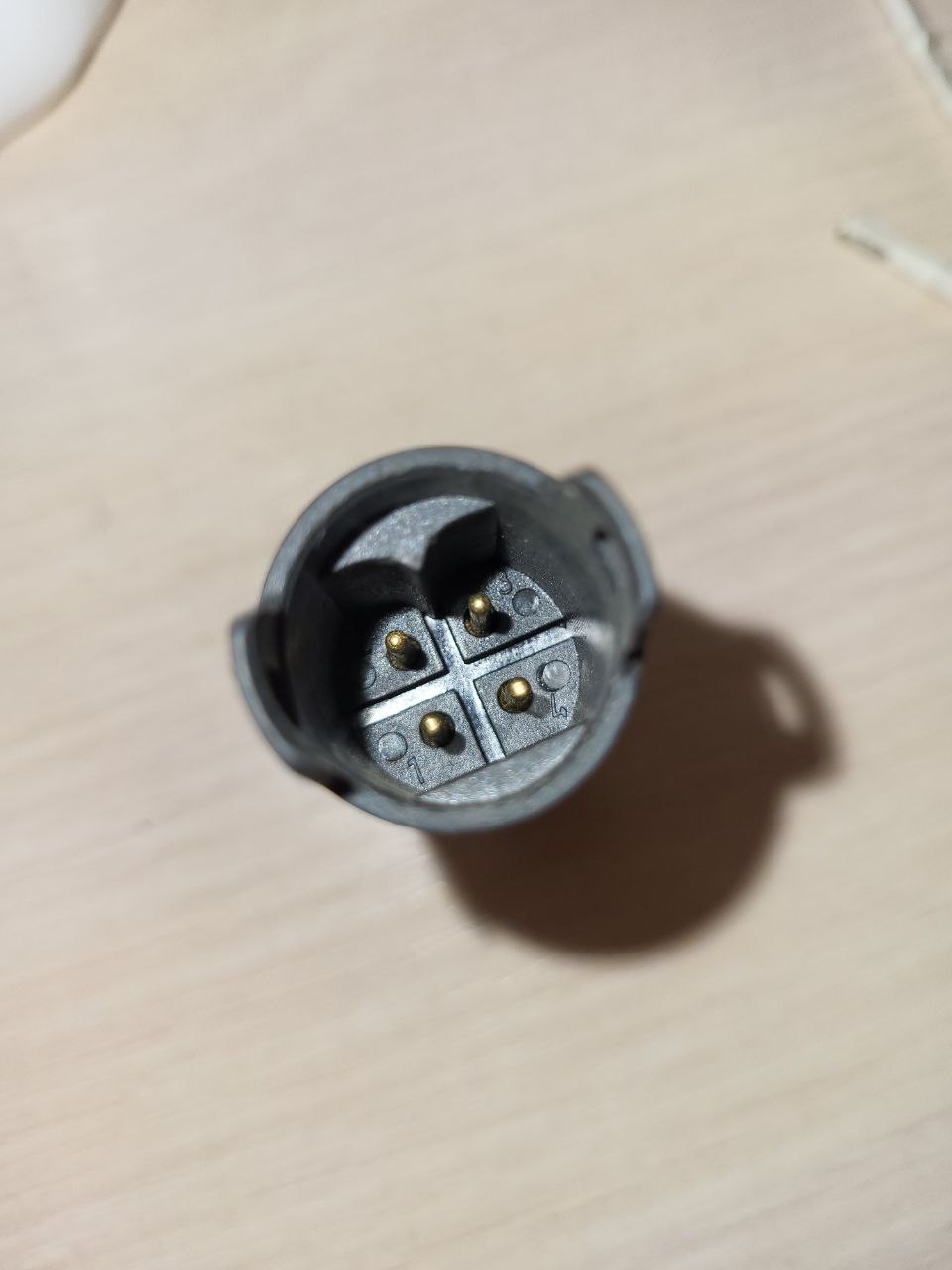
Let's figure out which contact is responsible for what according to the scheme:
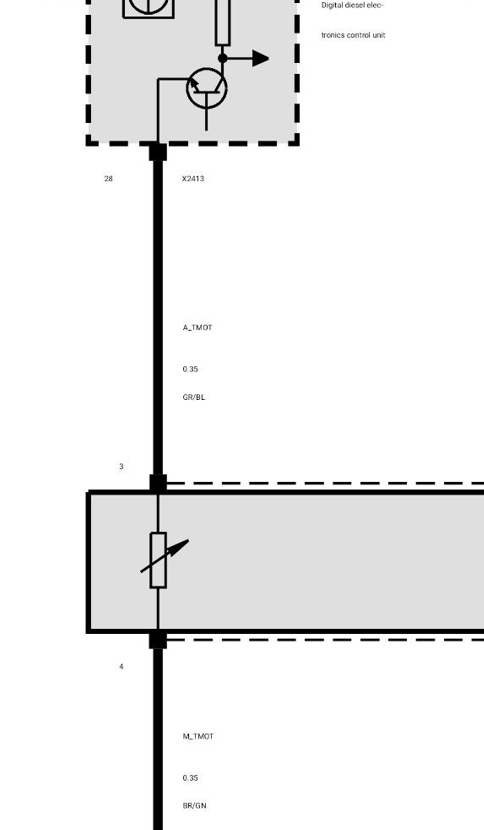
As you can see, pins 3 and 4 are responsible for the temperature sensor for the control unit. We connect the chips and the tester:
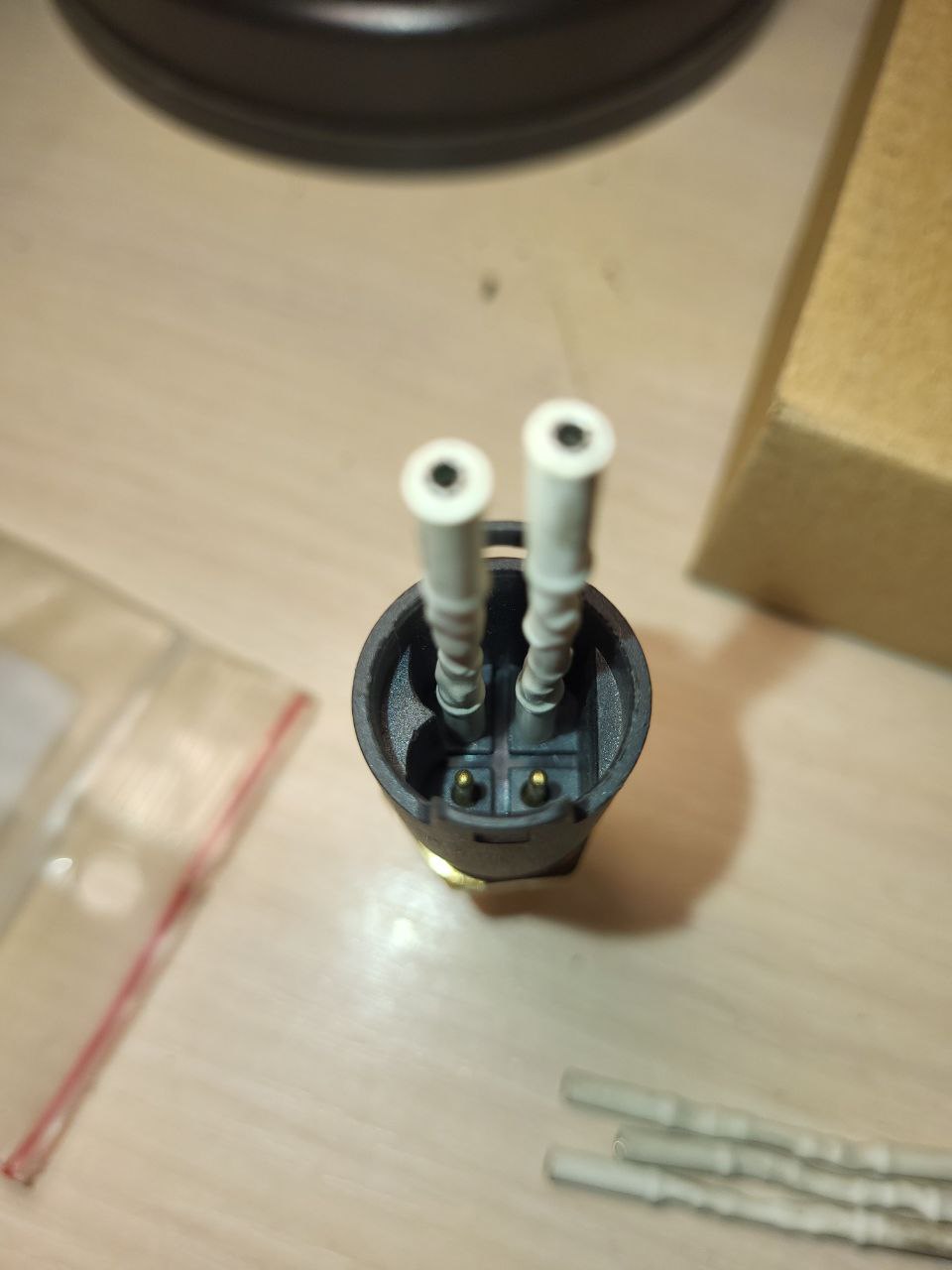
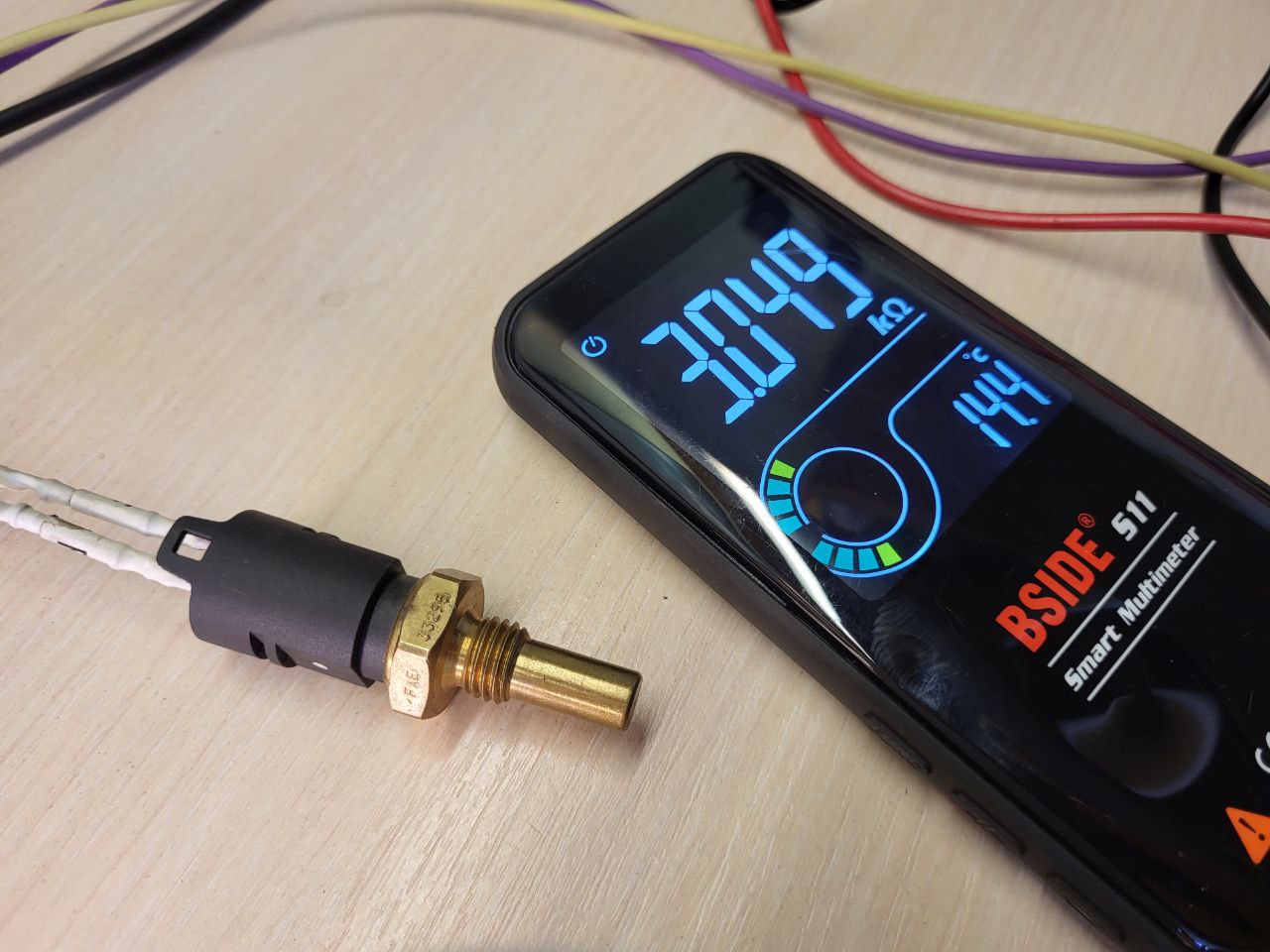
But we immediately notice that the temperature in the room is 14.4 degrees (this can be seen on the tester ;-)) and at such a temperature the resistance readings are 3049 Ohms.
The next step is to check the resistance when the sensor is heated:
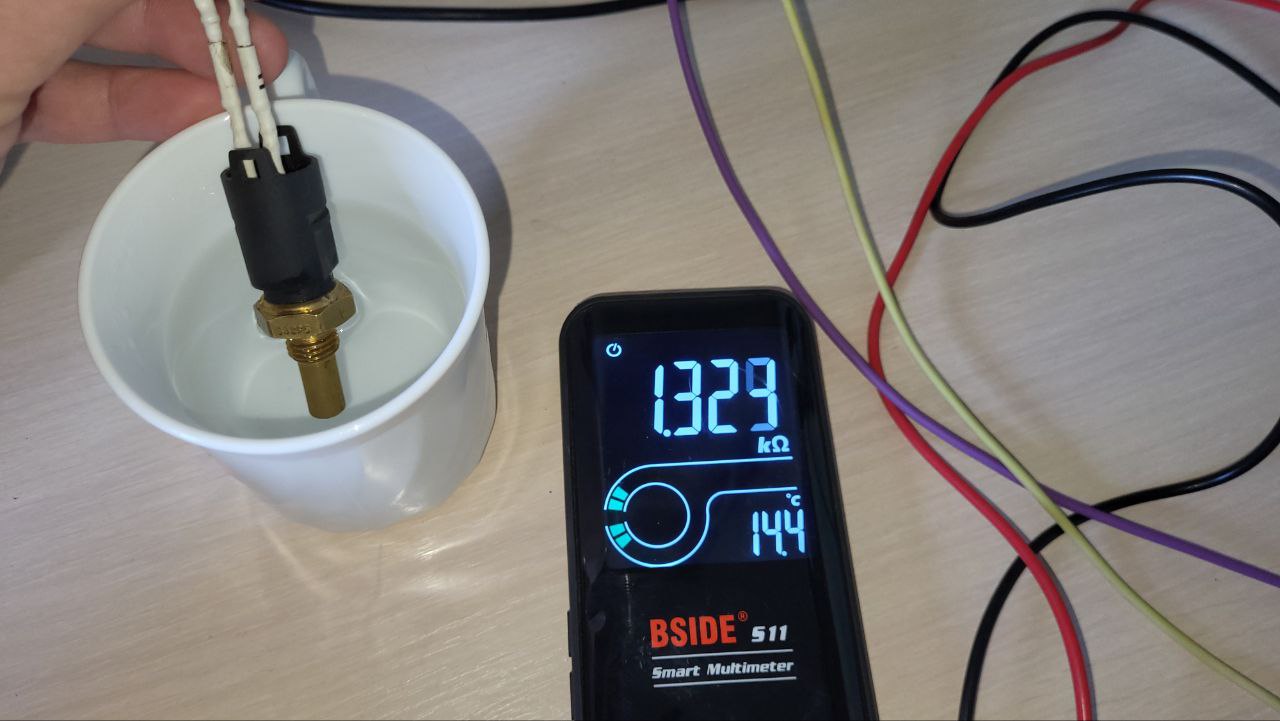
Water was not measured with a thermometer, but it immediately became clear that the sensor responds to temperature changes. About 65-70 degrees and a resistance of 1323 ohms.
So the sensor has a 99% probability of working.
Why do I leave 1%? There were cases when the sensor passed all tests, but turned out to be faulty. An explanation can be found, because the inspection in the cup lasts a minute, and the work of the sensor on the car engine lasts for hours. And due to the fact that the resistance opposes the current, a bad contact may occur in the middle of the thermistor at certain moments. In this case, the error, during diagnosis, will be displayed as " Sporadic ".
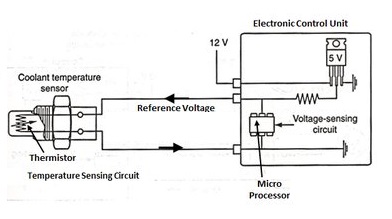
Approximate scheme of current resistance:
7.7 Other verification methods
There are other methods of finding a fault in the case of detected errors, which relate to the detection of a fault or inconsistency in the temperature sensor circuit. These search rules apply not only to ECT, but also to other temperature sensors. But it should be remembered that each sensor is a separate story, with its own characteristics and features. Example:
- Monitoring by diagnosing temperature readings and disconnecting the connector from the temperature sensor, but this method is very inaccurate.
- Connecting the variable resistor to the ECT connector and checking the indicators on the dashboard or the indicators from the control unit when the resistance changes.
- Checking resistance or voltage indicators near the connector of the control unit
8. Conclusion
In summary, the coolant temperature sensor plays a key role in the operation of the car engine and its systems. It provides optimal engine operating conditions, maintaining economy, environmental friendliness and comfort during car operation.
Remember that these checks can detect coolant temperature sensor malfunctions, but they do not guarantee that the sensor is working correctly under all conditions. If you suspect the sensor is faulty, replacing it may be your best bet. If the engine temperature problem persists after replacing the sensor, another component in the cooling system, such as the thermostat, water pump, or radiator, may be the cause. One way or another, you will need to understand this situation, or turn to specialists. A specialist is not always good service and reception "for all the money", but the responsibility in branded or professional service stations should be better. It's up to you, dear user.
Have a nice trip and take care.