Care and restoration of the turbocharger

AvtoAd
01/01/2023
The first big wave of automotive turbocharging came to car showrooms in the 80s. Everything from Chrysler K-car wagons to high-end Porsche sports cars has a turbocharger under the hood. These turbocharged cars couldn't seem to leave the factory without "TURBO" written on them. The fact is that a turbocharger can increase the performance "on demand" of an economical engine. Turbocharged engines are once again becoming more common as consumers demand more power along with better fuel economy.
What is a turbocompressor
A turbocharger sits between the engine and the exhaust and takes the energy that would normally flow out of the tailpipe and puts it to better use. Inside the turbocharger are two finned wheels that rotate together on a common shaft. The hot side turbine wheel captures the exhaust power. The compressor wheel on the cold side takes the energy produced by the turbine wheel and uses it to return air to the engine. The air then mixes with the fuel, and before long, the Chihuahua's smaller four-cylinder suddenly boasts the power of a Doberman V-8. Because the compressed air entering the combustion chambers contains more oxygen, the engine can generate more power than if it were running without a turbine. When the driver doesn't need the extra power, the turbo kicks in, allowing the engine to run with improved fuel economy.
How to care for a turbocharger
Although the turbocharger itself is a relatively simple device, replacement can be an expensive reality. A new replacement turbo can cost several thousand dollars, not including installation and labor. The way to avoid premature failure of the turbine is to strictly follow the recommendations of engine oil manufacturers and maintenance.
Turbo engines can be tough on engine oil. The same exhaust that turns the turbine wheel gave its name to the hot side. The case with the hot side can become noticeably hot. Since the shaft can rotate in the 100,000 rpm range, the use of high-quality motor oil is a key factor in turbocharger survival.
Advances in oil-cooled and water-cooled turbocharger housings have made turbocharged engines more consumer-friendly than ever, but neglecting to change the oil can still lead to the premature end of a turbocharger .
On balance
The price of a new turbocharger can be staggering. If the turbocharger failure is due to normal wear and tear, rebuilding it may be an option. The bad news is that rebuilding a turbocharger is beyond the scope of most DIYers. Disassembly and inspection may be possible, but any machining and balancing requires both special equipment and expertise. The good news is that there are professionals who can handle this job. A turbocharger rebuilt with fresh bearings and seals can last many miles for a lot less than a new replacement unit.
Five stages of rebuilding a turbocharger:
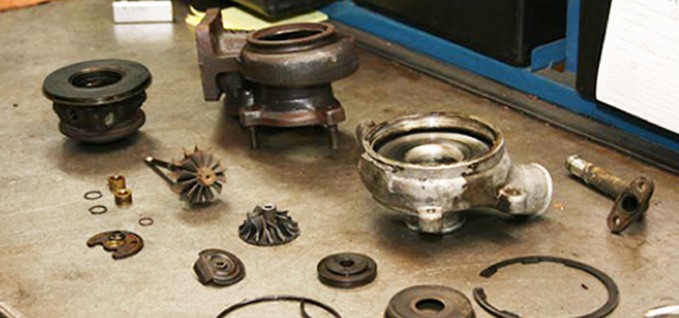
- Step 1: Disassembled turbocharger with parts on the table.
The turbocharger must be disassembled. The oil inside the turbocharger can get so hot that it boils and leaves carbon behind. The carbon then clogs the oil passages and restricts oil flow. Restricted oil flow is bad news for a turbocharger.
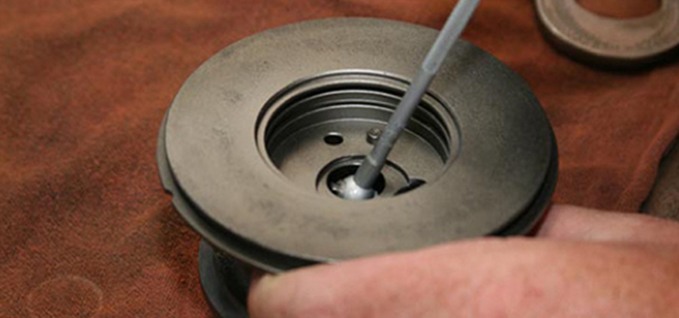
- Step 2: Clean and check the turbocharger.
Parts are cleaned and inspected. Measuring the inside diameter of the housing and the outside diameter of the shaft determines which parts can be reused and which need to be replaced. Cracked exhaust pipe housings require replacement.
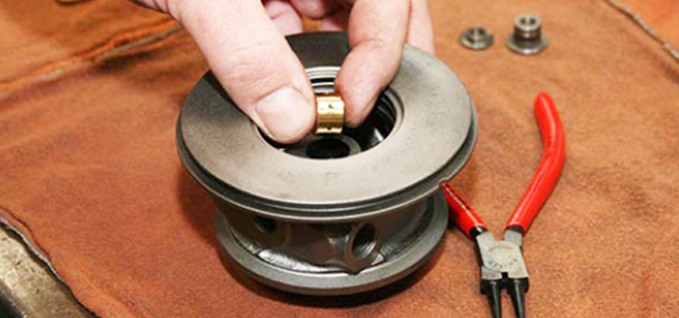
- Step 3: Assembling the turbocharger cartridge with bearings and seals.
The turbocharger cartridge is assembled with new bearings and seals. The shaft rotates on a thin layer of oil, like an engine crankshaft. Worn bearings cause excessive shaft play. Oil can leak through the seal. Clouds of blue smoke from the tailpipe during boost could explain where all that oil is going.
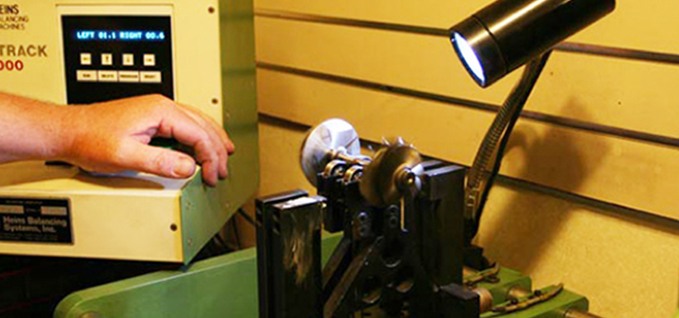
- Step 4: Turbocharger Balancing.
Balance is everything. Even the slightest imbalance can cause a turbocharger to rupture. The compressor and turbine wheels are balanced separately and then the entire assembly is balanced.
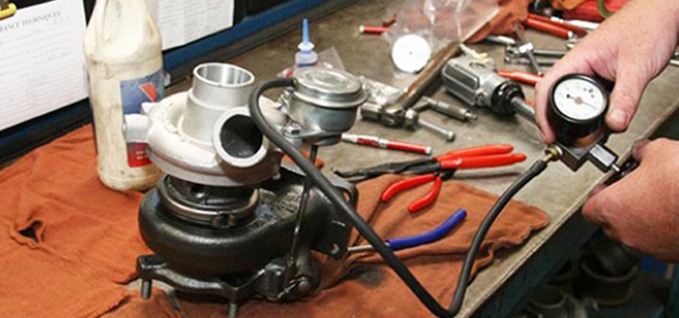
- Step 5: Pressure or vacuum test the turbocharger bypass valve actuator.
The turbocharger cartridge is installed back between the hot and cold side housings. After assembly is complete, the bypass valve actuator is pressure tested to see if it opens the internal bypass valve at the correct pressure.
Always follow the safety rules when working with the car. To prevent injury, use appropriate personal protective equipment, which may include protective gloves, goggles, helmets, and footwear.