Briefly about chip tuning

AvtoAd
16/08/2023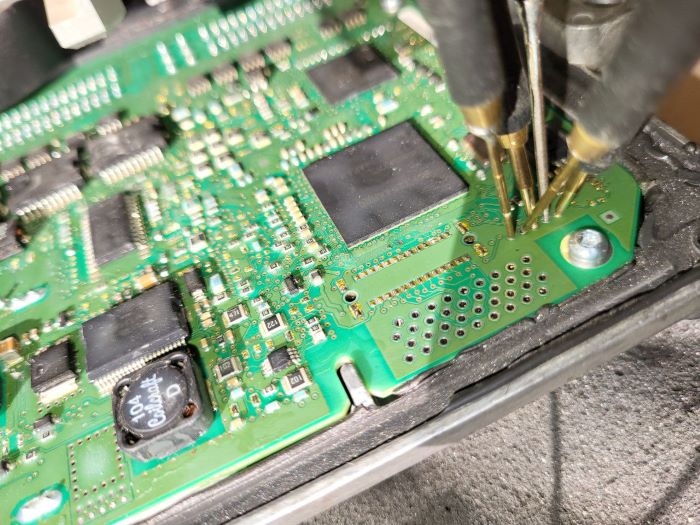
Content:
- Chip tuning (Chip tuning)
- Fuel mixture
- Turbocharging
- Software chip tuning
- Tuning box / module for increasing power / alloy
- Conclusion
1. Chip tuning (Chip tuning)
Initially, I meant replacing or rewriting the EPROM (erasable programmable read only memory) chip located in the Electronic Control Unit (ECU) of the engine, transmission or other unit. This is done in order to improve indicators: power, environmental friendliness or economy. These capabilities are available because the manufacturer is forced to use conservative settings in order to compensate for possible deviations in current production for different regions and conditions of use and maintenance. As a rule, but not always, cars with a modified program require more careful maintenance and quality fuel.
In the photo, the process of erasing the memory of the microcircuit. Photo from the site
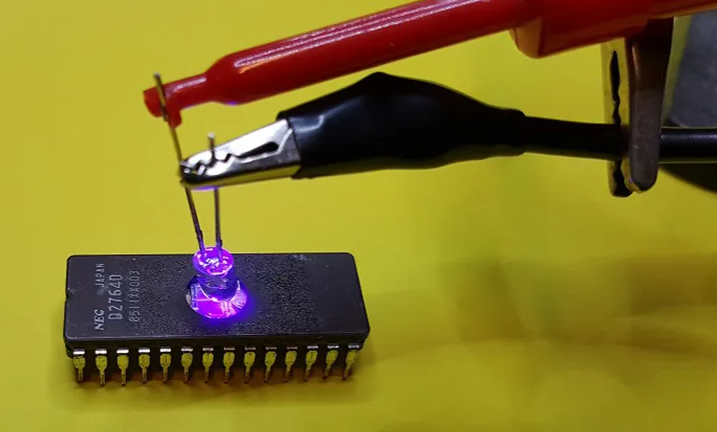
This is how the chip tuning procedure looked in the 1980s and 1990s. Today, the term chip tuning is a bit misleading because it continues to be used for a procedure that no longer physically replaces the chip. Modern engine control units can mostly be reprogrammed via an OBD diagnostic connector or a special BDM engineering connector.
With the development of technology, more and more complex electronics were also installed in cars. A modern engine control unit ("brains" in the common people) allows you to control many aspects of engine operation, such as ignition advance angle, fuel injection, electronic throttle, bypass valve, regulation of turbo boost pressure, speed and speed limits, automatic transmission, DSG, PDK and dozens of other nodes.
There are many parameters that can be changed during chip tuning and each of them affects power, sensitivity, economy and environmental friendliness in its own way.
One of the classic parameters, which is familiar to many people from old cars, is the ignition advance angle . For each engine at different loads and revolutions, there is a certain range of permissible ignition angles. At certain values, the maximum torque that turns the engine is reached. If all other parameters of the engine are satisfactory, then this value is used at this point of the ignition "map". The higher the octane number, the slower and more stable the gasoline burns and the greater the angle to TDC (Top Dead Center) we can use. Accordingly, after chip tuning, the car, as a rule , is more capricious in the choice of gasoline and will no longer allow you to fill it with "what got in" from any gas station. The ignition angle is related to such a factor as detonation, or the burning of the fuel mixture, caused not by a spark from lighting a candle, but by other factors. There are many factors for the appearance of detonation, but if we limit ourselves to a few words - it should be avoided at all costs, since a high level of detonation can lead to serious engine damage and even to the destruction of the unit. The pistons crackle banally. On diesel engines, local overheating of the piston group occurs and also leads to the destruction of sleeve-piston pairs.
There are many other parameters that the calibrator likes to interfere with. But it should be remembered that tampering with the software of the engine control unit is a very responsible and accurate job. It requires professional knowledge in the field of programming and understanding of all aspects of engine operation. Not infrequently there are certain individuals who, in the pursuit of a couple of dollars, ignore the principles of construction and interaction of engine operating modes and blindly twist values for the effect of dynamic acceleration. At the same time, neither detonation, nor the temperature regimes of the relevant units, nor the performance of fuel systems are taken into account, which often leads to failure of fuel pressure sensors and valves.
And it should also be remembered that before tuning, qualified specialists and workshops will conduct diagnostics and suggest replacing some elements with improved and more durable ones so that they can withstand higher values of torque and temperature without damage. These are usually spark plugs and ignition coils, high performance air and fuel filters.
When choosing a Tuning atelier, don't look for cheaper, look for quality, and no matter how paradoxical it may seem, it will be cheaper in the long run.
Let's consider several maps, the change of which significantly affects the dynamics of the car
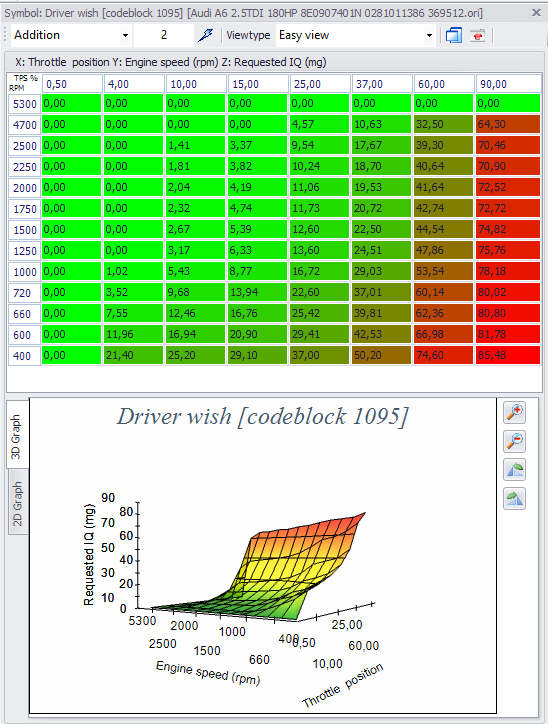
This map is responsible for the torque request through the gas pedal, the driver's map (Driver Wish) as it is also called Acceleration Pedal _ torque Engine _ Map.
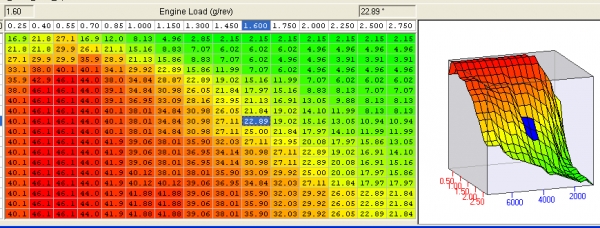
Above is an example of a tabular representation of the ignition angle and its graphical three-dimensional representation. Values vary depending on crankshaft speed (engine speed) and load. The task of adjustment is to select the optimal values in each cell.
2. Fuel mixture
The fuel mixture is the next and extremely important parameter for chip tuning and car tuning. Previously, everything was simple - by changing the injection time, you could make the mixture more "rich" or "lean". With the widespread introduction of diesel engines and forced-air gasoline engines, the parameters in the configuration of the fuel system have become much larger. Now you need to configure: Injection phase, Injection time, Injection volume, Injection pressure, Number of pre- and post-injections and many other parameters. Everyone can in one way or another affect the power, sensitivity, smoke, environmental friendliness, economy, noise and temperature of the engine. For a modern manufacturer, the primary goal is compliance with environmental and cost-effectiveness standards! In most cases, these two parameters have a significant impact on the car's power and reduce driving pleasure, making the car more sluggish and thoughtful.

3. Turbocharging
Diesel and gasoline engines with turbocharging allow you to get a significant increase in power and torque by changing the parameters of excess pressure control. The high efficiency of these motors with proper adjustment allows you to keep the fuel consumption unchanged or even reduce it in the mode of light and medium loads.
Electronic engine management allows you to adjust and adjust the parameters of its operation with such modifications as exhaust and intake systems, improved intercoolers and cooling system, different injectors and turbochargers, etc. Any modifications to the engine that affect its volumetric efficiency (VE) require adjustments to the control program.
Poorly made chip tuning or engine settings can bring not only disappointment from the obtained result, but also turn into significant repair costs in the event of a breakdown.
4. Software chip tuning
The most common way of chip tuning is to change the program in the regular engine control unit . In this case, all control takes place according to a standard and completely understandable scheme for the engine. This can be done through the OBD diagnostic connector or in the case of the impossibility of diagnostic access to the control program, programming occurs when directly connected to the engine control unit or directly into the EPROM flash memory.

On the right is the OBD2 connector used for diagnostics and chip tuning of most cars. This connector is present on all cars since 1998 in a mandatory manner and is used for standard diagnostics. It is worth noting that the manufacturer struggles with the possibility of reprogramming and uses various protection systems against unauthorized access. This is how various protection algorithms appeared, for example TP8/10 (Tuning Protection), some of which are now successfully managed, while others require disassembly of the car's control unit and reprogramming on the table.
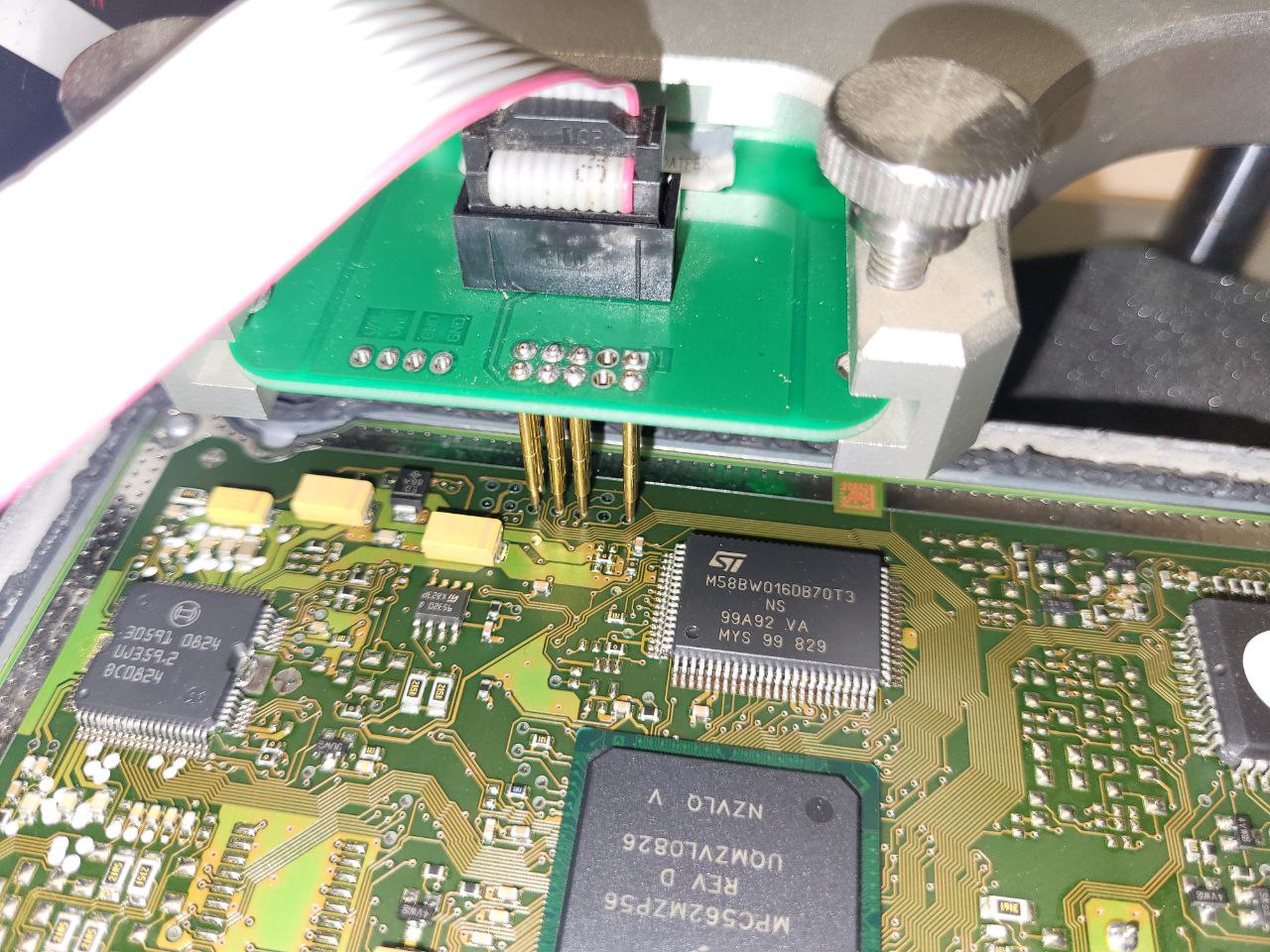
On a number of modern cars for tuning (chip tuning) the control program requires a connection to the ECU (engine control unit) directly. For this purpose, you can use the standard engineering connector on the board - BDM or other connection points to the processor to access the flash memory. Regardless of the connection method, only the control program changes and no structural changes are made to the control unit. With competently performed work, it is impossible to determine that the block was dismantled, disassembled and programmed!
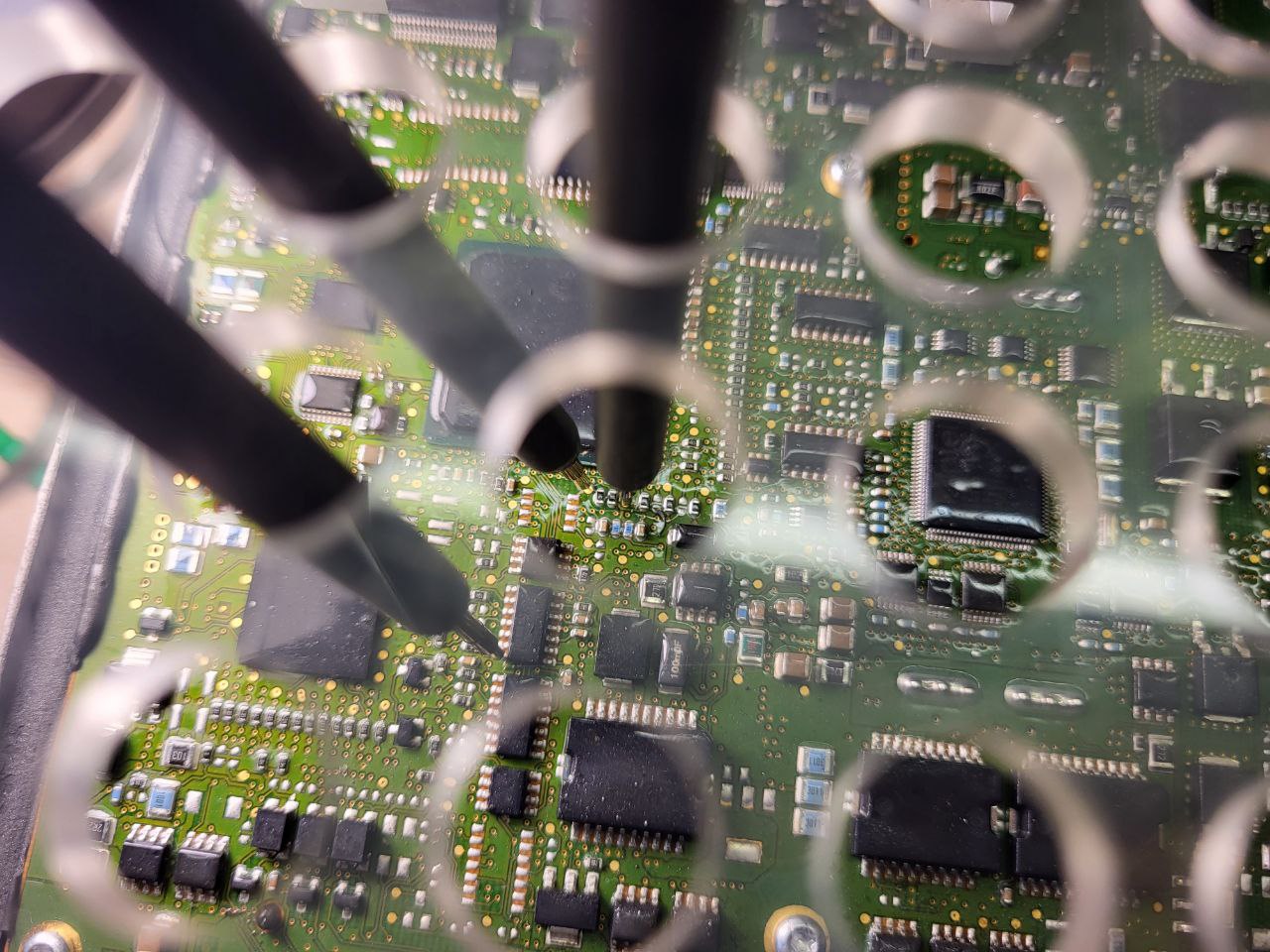
This is how the connection looks like in boot mode:
Using pins to connect to specific pins on the board
And with the use of specialized platforms, or the so-called special engineering connector BDM
There are other ways to make changes to the electronic engine management. For example, installing an additional module, or as it is also called - a tuning box or "box".
5. Tuning box / module for increasing power / blunder
If, for one reason or another, classic chip tuning is not possible or unavailable, changing the parameters of the car's operation is carried out by adjusting the control signals using an additional controller. The essence of its work is very simple - to receive the signal coming from the engine control unit, change it and send it to the device to which it went. To put it more clearly, let's take the fuel injection system with PPVT (High Pressure Fuel Pump) on a diesel engine. The PPVT pump (High Pressure Fuel Pump) ensures the pressure set by the engine control program in the fuel rail. Injectors inject fuel. The more fuel a diesel engine receives, the higher its power. So, it is necessary to intercept the signal coming from the EBK to the PPVT (High Pressure Fuel Pump) with the help of a ballast block and increase the pressure request. As a result, more fuel will enter the engine and the power will be higher! Blocks that control boost pressure, injection time and other parameters affecting power work on the same principle.
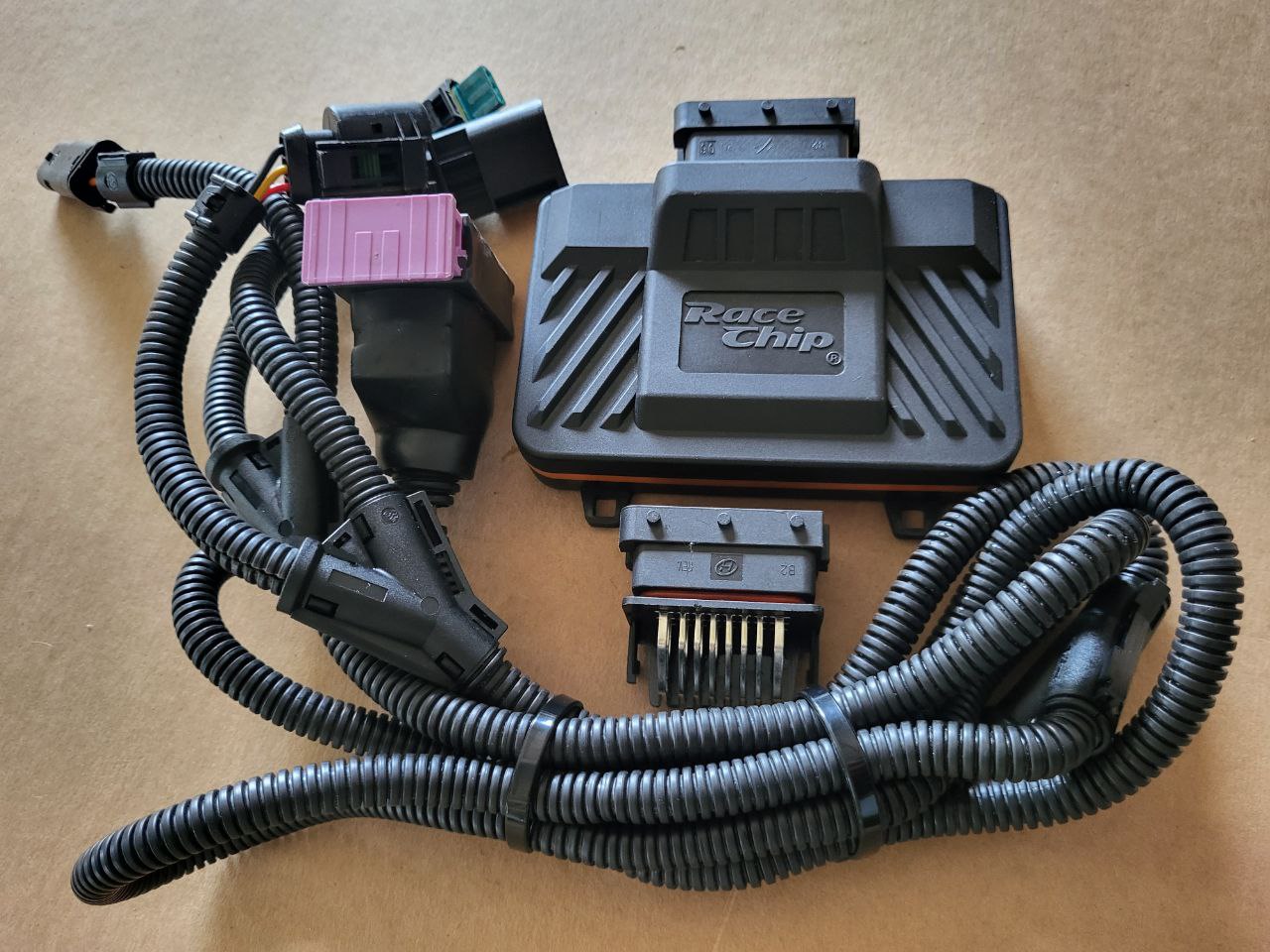
Above is an example of four-channel box tuning. The diagram shows the connection to the +12V power supply and four pairs of connectors that are installed in the gap of the corresponding executive devices.
As they say cheap and angry! It is unnecessary to say that the result can be compared with a full-fledged chip-tuning. Cheating on 2 or 3 parameters (and almost no one else does) is impossible to get a balanced and safe effect of increasing power, sensitivity and economy as when reprogramming the engine control unit. In emergency situations, the protection algorithms will also not be able to fully work, since the "box" does not understand what is happening and continues to make changes, and the chip tuning program refers to emergency tables and engine protection parameters.
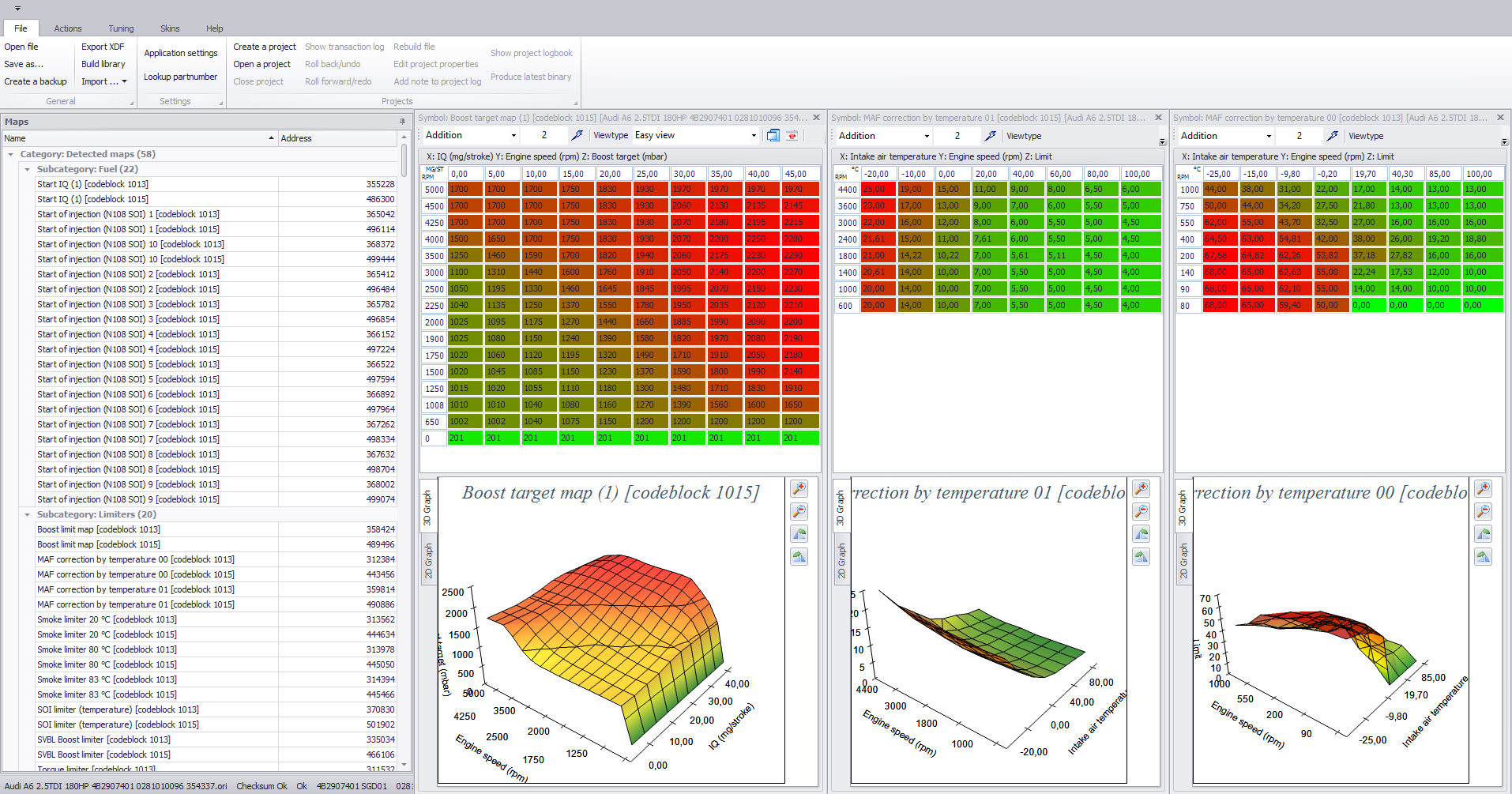
Above is a typical example of a good Audi 2.5TDI engine tuning with over 40 tables modified! Compare this with the rough work of a tuning box, which makes changes in 2-3 signals without understanding what the engine is actually doing - warming up, regenerating the soot filter, being in the protection mode (component protection) or using barometric compensation due to discharge when driving in the mountains.
If you have a choice between any tuning box and full-fledged chip tuning - choose the second. It is safer, more reliable and more natural for the engine to work in any mode of operation!
6. Conclusion
Proper tuning of the engine requires not only an understanding of where and what to correct, but also, most importantly, WHY and what effect this change will have on other parameters. Therefore, you should not blindly trust people who promise you a unique solution with power and economy, significantly better than strong companies that have proven themselves. Experience and knowledge is what beginners and loners lack in the field of chip tuning, and this ultimately leads to breakdowns, wasted money, wasted time and frustration.
The availability of original equipment for reading and programming the car, diagnostic equipment for conducting a preliminary assessment of the condition of the car before starting work and after its completion, and most importantly, experience and knowledge are the necessary requirements for high-quality chip tuning and tuning of the car. The presence of the DINO stand also allows for the development of programs with precise control of parameters.