Which battery to choose during a blackout: gel or AGM battery

AvtoAd
09/12/2022
Constant power outages, the threat of blackouts, and network outages are among the few challenges that Ukrainians have to deal with today. However, the most acute issue is the provision of heat for the home in the event of a complete blackout. A practical solution to this problem is to buy a battery. But which one to choose: GEL or AGM? In this article, we will understand what their difference is.
Content
2. Advantages and disadvantages of the AGM battery.
4. Advantages and disadvantages of the GEL battery.
5. Charging AGM and GEL batteries.
6. Self-charging of AGM and GEL batteries .
7. Number of cycles of AGM and GEL batteries.
8. Overheating of AGM and GEL batteries.
9. Depth of discharge of AGM and GEL batteries.
10. Starting and maximum current of AGM and GEL batteries.
12. Operation of AGM and GEL batteries.
13 Application of AGM and GEL batteries.
14. Which battery to choose for heating the home.
AGM technology
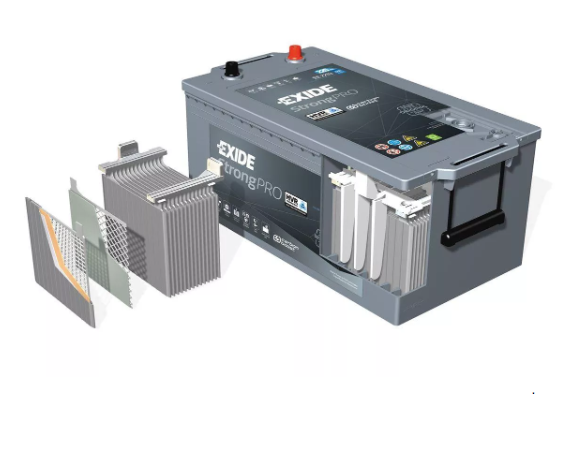
The AGM battery functions on absorbent mats. Some experts claim that this is ordinary fiberglass. However, the question remains open, because the manufacturers themselves keep certain features of this technology secret. It is only obvious that this "glass fabric" keeps the electrolyte inside and prevents it from evaporating.
The plates in such models are located close to each other, absorbent mats lie between them. This design principle significantly increases battery capacity. Due to the fact that the electrolyte is located inside, the battery can be installed as desired. Only one limitation is that it cannot be turned over. Plates are made of high-quality, pure lead. Due to which, the resistance inside the device is small, and this allows you to quickly charge the battery.
 .
.
Advantages and disadvantages of AGM battery
The AGM battery device is similar to the traditional battery option, except for the densely packed fiberglass separators and sealed housing. Such, at first glance, insignificant change endows the battery with various interesting properties. It is immediately worth noting that within the framework of AGM batteries, the characteristics of specific models may differ many times. This difference depends on the components and technologies used.
Advantages of the AGM battery
- The advantage of AGM technology over the traditional one is a lower vulnerability to strong discharges. This allows you to work in cyclic mode. AGM batteries, without serious damage, allow a discharge about 20% stronger than traditional analogues allow (30% and 50%, respectively).
- Accumulator batteries with absorbed electrolyte have a hermetic housing with valve regulation. This allows you to use the battery in any position. However, inverting is not recommended due to the potential overlap of safety valves. Valves are necessary to release excess pressure.
- In the case of an absorbed electrolyte, maintenance is not required due to the gas recombination process occurring in the pores. Water topping up is not required during the entire service life. The exception is evaporation due to improper charging.
- Protection against sulfation and corrosion. The absence of fumes signals one nice feature: lead plates are not prone to corrosion. Also, batteries with absorbed electrolyte are considered much less susceptible to sulfation. This directly affects the service life of the battery.
- Invulnerability to shaking and vibration. Thanks to fiberglass separators, the electrolyte is always in reliable contact with the electrodes.
Disadvantages of the AGM battery
- As for the disadvantages, the main one is increased sensitivity to improper charging. The charge should be carried out in the correct mode with minor deviations. For this, manufacturers recommend abandoning manual charging methods and using only high-quality automatic chargers. Otherwise, the battery life may be much shorter than expected.
GEL technology
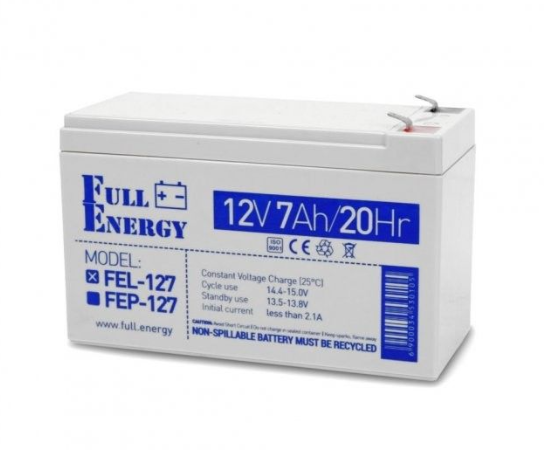
In GEL batteries, the electrolyte has a gel-like consistency, hence the name. For this, a special chemical reagent synthesized on the basis of silicon dioxide is added to it. This substance fills the space between the electrode plates. The plates themselves are thickened and consist of high-purity lead. As a result of the chemical reaction, gas is released, which creates bubbles in the gel. It is in them that the process of gas recombination takes place.
Advantages and disadvantages of the GEL battery
- Currently, such batteries are used not only in cars. The device is trusted with high-tech expensive equipment when there are constant interruptions or a complete lack of centralized power supply. A plus is the ability to work successfully even in harsh weather conditions, including at high temperatures.
Advantages of the GEL battery
- Full and fast recovery of the charge level even after 100% battery discharge.
- Durability - the electrodes are thickened, thanks to which grid corrosion is reduced.
- No need to add water or maintain the battery.
- The average service life is 7-10 years, and the warranty after purchase is 5 years.
- Can withstand up to 400 full discharge cycles.
- The absolute tightness of the structure ensures the safety of use for both humans and the environment.
- High starting current ensures reliable engine start even in severe frost.
- They tolerate operation under conditions of extreme temperatures.
Disadvantages of the GEL battery
- A significant and probably the only disadvantage of GEL is the high cost compared to other batteries. AGM batteries will cost you an order of magnitude cheaper, but they also last 30-50% less.
Charge AGM and GEL batteries
A charge current of 0.1C or 10% of the battery capacity is considered classic for lead-acid batteries, but the maximum charge current of AGM and gel batteries is different:
- AGM – 0.3C (for example, for the battery Delta HR 12-100 (100Ah) – charge current 30A);
- GEL – 0.2C (for Delta GX 12-100 battery (100Ah) – charge current 20A).
Charging with the maximum current slightly shortens the life of the battery (by 5-7%), but it can be very appropriate in cases where you need to charge the battery quickly. For example, when working in hybrid systems with a generator. Thus, the minimum possible charge time (taking into account the efficiency) for an AGM battery will be about 6 hours, and for a GEL - 8 hours .
Self-charging of AGM and GEL batteries
AGM: Self-discharge is more intense than gel ones.
GEL: The amount of self-discharge is small, so it is suitable for use where the discharge occurs with small currents for a long period
Number of cycles of AGM and GEL batteries
AGM: About 300 charge-discharge cycles.
GEL: 2-3 times higher than AGM (about 600 cycles) due to the viscous electrolyte. Plates remain covered with it during deep discharge, so they are less prone to corrosion.
Overheating of AGM and GEL batteries
AGM: Overheating is not critical, but dangerous.
GEL: Overheating can cause the battery to explode.
Discharge depth
AGM: Desirable operation with a depth of discharge slightly more than 30%.
GEL: Well withstand deep discharge.
Starting and maximum current
AGM: Starting currents are quite powerful.
GEL: Not able to give large current values, especially starting values, due to high internal resistance.
Short circuit
AGM: Low sensitivity to short circuits.
GEL: High sensitivity to short circuits.
Operation of batteries
AGM: In any position except inverted.
GEL: In any position except upside down. Small damage to the housing does not cause electrolyte leakage due to viscosity.
Use of batteries
These two types of batteries differ because they are better used in different industries.
AGM: Have a wider range of applications due to the low price. Optimal for systems with liquid cycling.
Overall, the industries using AGM batteries have a significant growth rate, which is expected to exceed a CAGR of 5.3% during the period 2019 to 2025. It is estimated that this figure will reach more than $13.9 billion by 2025. This is because the key players in the AGM battery market are well-known companies such as Yuasa, Exide Technologies, and Power-Sonic Corporation. In addition, experts recommend using AGM batteries in various industries, so they can be used in static conditions, for example, in medical equipment. It is also suitable for heavy-duty applications such as emergency systems and utility companies.
GEL: Best suited for use in systems with a large charge-discharge cycle and where the discharge is carried out by small currents for a long time.
Gel batteries are used in the Asia Pacific region with significant growth and development due to the ongoing rapid industrialization. Key players in the gel battery market include Microtex, Enersys, Yuasa, etc. These batteries require minimal maintenance, making them ideal for cell towers, marine equipment or critical applications such as nuclear facilities.
Which battery to choose to provide heat for the home
AGM batteries are more affordable - that's all for now. GEL batteries require special chargers, but last longer. In addition, gel batteries require almost no maintenance: when the battery is charged, the hydrogen is absorbed by the plates and returned to the electrolyte, which makes it safe because there is no liquid inside. The operating characteristics of gel batteries remain high and stable until the end of their service life. The extreme weather conditions it can operate in means it can withstand the harshest environmental tests, so we recommend choosing a GEL battery.